Making Your Own Bread (But Not Really): How We Solved Niseko's Breakfast Problem
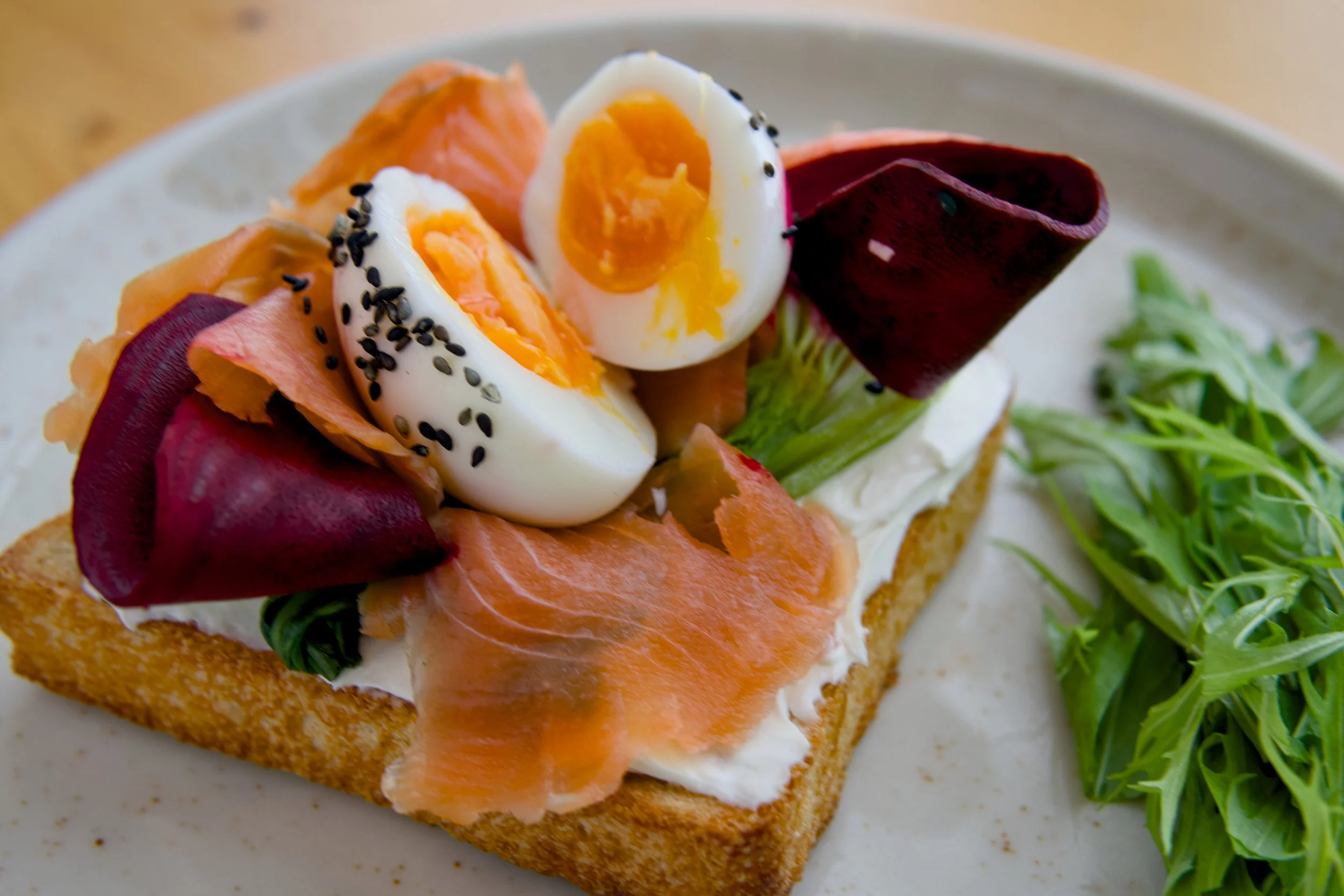
When shokupan is perfect but you still want to say "house-made"
Breakfast in a ski resort has one job: fuel people for the mountain without weighing them down. Too heavy and they're sluggish on the slopes. Too light and they're exhausted by 11am.
At Milky House Country Inn in Niseko, we faced an additional challenge: guests expected "house-made" everything, but our small kitchen couldn't handle full-scale bread production on top of breakfast, lunch, and dinner service.
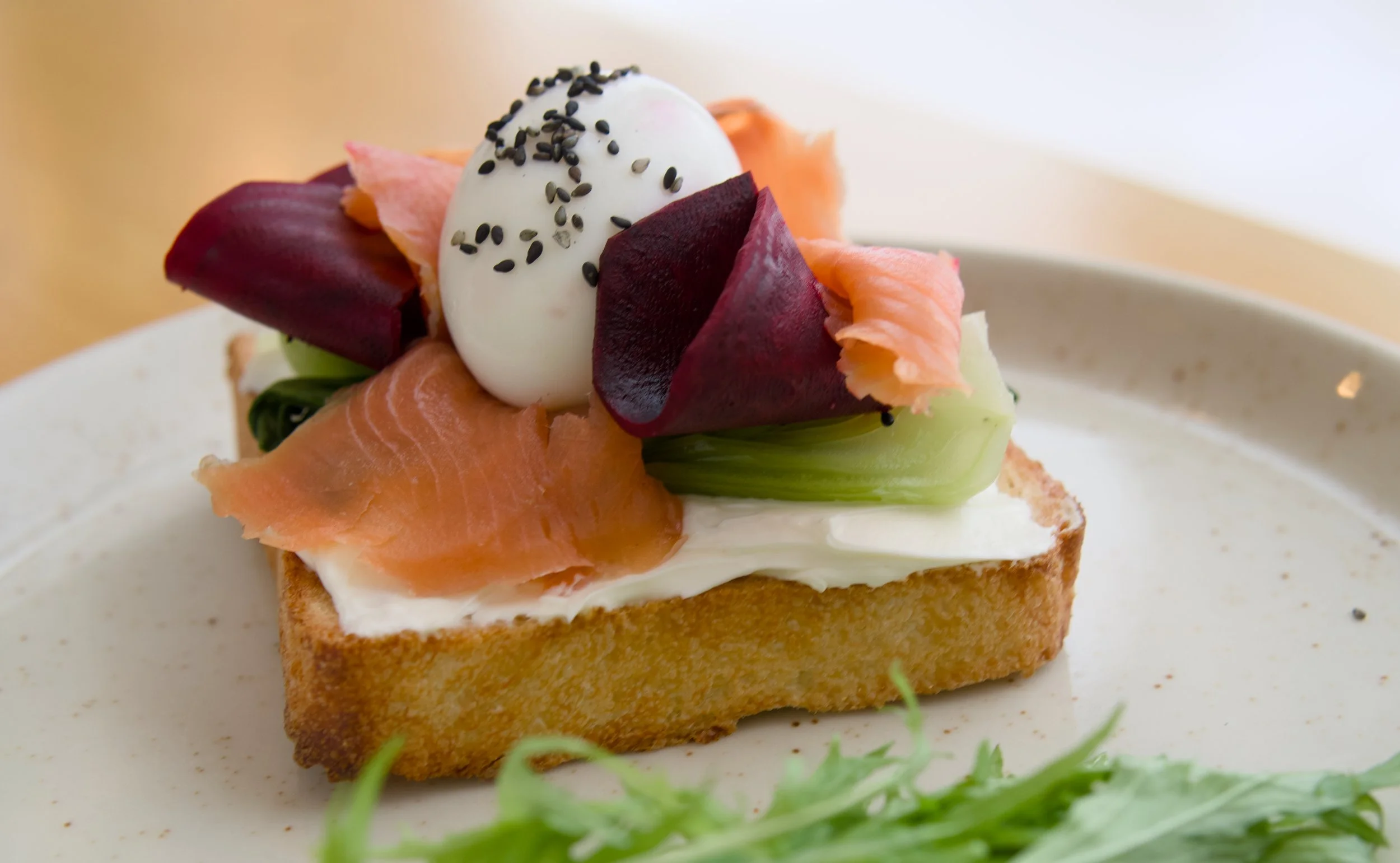
The solution? We made bread, but not the way you'd expect. And it led to one of our most popular breakfast items - an open-faced salmon sandwich that looked impressive but required almost no morning prep work.
The Shokupan Dilemma
Here's the reality: Hokkaido makes some of the best shokupan (Japanese milk bread) in the world. Local bakeries were producing perfect loaves daily using Hokkaido milk, Hokkaido wheat, Hokkaido everything.
We could buy these loaves for ¥400-500 each. They were objectively better than anything we could make given our equipment and time constraints.
But guests asked: "Do you make your bread in-house?"
This is a genuine problem for restaurant menu development in resort settings. Customers associate "house-made" with quality and care. Saying "no, we buy it" feels like admitting you're cutting corners, even when the product you're buying is superior.
The Dough We Already Had
For our lunch and dinner menu, we were making focaccia and fried pizza. This meant we had pizza dough production already dialed in - a 75% hydration dough that we'd developed for good texture and flavor.
One evening, looking at our pullman loaf pan (the rectangular bread mold used for shokupan), I had a thought: what if we just baked our pizza dough in this pan?
The Test:
We lightly greased the pullman pan with olive oil instead of butter (keeping with our Italian dough origins). Shaped our standard pizza dough to fit, let it proof until it reached almost the top of the pan, then baked it at 200°C for about 35 minutes after service for the morning after.
The result was nothing like shokupan. But it was exactly what we needed for breakfast sandwiches.
What We Got:
Crusty exterior from the olive oil and high-hydration dough
Open, airy crumb structure (not the tight, pillowy texture of shokupan)
Slightly chewy texture that holds up to moist toppings
Enough structure for open-faced sandwich applications
Actual house-made bread without adding a bread production program
This is what real recipe engineering looks like - using what you already have to solve a different problem rather than creating entirely new systems.
The Nordic-Japanese Salmon
Buying smoked salmon in Niseko was impossible but wild Hokkaido salmon was abundant, fresh, and reasonably priced.
The Gravlax Method:
Traditional Scandinavian gravlax uses salt, sugar, and dill to cure raw salmon. It's been done this way for centuries because it works - the cure draws out moisture while the dill provides aromatic complexity.
We adapted this for Japanese ingredients and flavor profiles.
Our Cure:
Coarse salt and sugar (standard ratio, about 1:1)
Fresh shiso leaves instead of dill
Light layer of sake instead of aquavit
Why Shiso Works:
If you've never had shiso (perilla leaf), it's in the mint family but tastes nothing like mint. It has this unique aromatic quality - slightly minty, slightly basil-like, with a distinct flavor that's hard to describe but unmistakably Japanese.
Fresh shiso is intense. When you cure salmon with shiso leaves pressed against the flesh for 24-48 hours, the aromatic oils infuse into the fish while the cure firms up the texture.
The result tastes like gravlax but distinctly Japanese. Customers familiar with gravlax recognized the technique; Japanese customers recognized the shiso. Both groups were happy.
The Process:
Layer of cure mixture on the bottom of a tray
Fresh shiso leaves laid out
Salmon fillet, skin removed, placed on shiso
More shiso leaves on top
Another layer of cure
Weight on top, refrigerate 24-48 hours
Rinse, pat dry, slice thin
This gave us house-cured salmon at about 40% the cost of buying smoked salmon, with better flavor and complete control over quality.
The Components: Batch Prep Strategy
The sandwich itself was simple assembly, but every component was prepped in batches to make morning service effortless.
Hokkaido Cream Cheese:
We didn't make this - Hokkaido dairy is too good to try to replicate. We bought excellent local cream cheese made from Hokkaido milk.
But here's the prep trick: we whipped it with a bit of cream to make it spreadable straight from the fridge. Nothing worse than trying to spread cold cream cheese on delicate bread in the middle of busy breakfast service.
Whipped and portioned into containers, it became a 10-second spread job instead of a struggle that rips your bread apart.
Soft-Boiled Eggs - The Rational Oven Method:
This was a game-changer for menu development services efficiency.
Traditional soft-boiled eggs: boil water, add eggs, time precisely, ice bath, peel immediately. Stressful during morning rush, inconsistent results, burns from handling hot eggs.
Our Method:
Rational combi oven, steam mode, day-before prep.
We'd cook 30-40 eggs at once the evening before breakfast service. At the right temperature and time so the whites set just enough to peel while the yolks stay liquid and creamy. After cooking, straight into ice water bath to stop cooking.
Peel them all while you're watching them (easier than during rush), store peeled eggs in fresh ice water in the fridge overnight.
Morning service? Grab an egg, cut it in half, season with salt and sesame seeds, done. Perfect soft-boiled eggs every time with zero morning stress.
The quality of Japanese eggs made this work. The yolks are so rich and orange from the feed quality - they look almost neon when you cut them open.
Pickled Red Beets:
We were getting beautiful red beets from a local farm. Too good not to use, but raw beets for breakfast didn't make sense.
Quick pickle solution:
Roast beets until tender (we did this in batches weekly)
Peel while warm (skin slips right off)
Slice thin on mandoline
Cover with pickling liquid (rice vinegar, sugar, salt, water)
Refrigerate, ready to use in 24 hours
The pickling liquid we reused multiple times, getting more complex with each batch. Those pickles lasted 2-3 weeks refrigerated and added acid, sweetness, and color to the breakfast plate.
Steamed Bok Choy:
Every morning, we'd steam a bunch of baby bok choy just until tender. This took maybe 5 minutes in our steamer.
Why bok choy for breakfast? It needed to be:
Quick to cook in morning rush
Nutritious for skiers
Not too heavy or rich
Visually appealing
Bok choy checked all boxes. Lightly seasoned with sesame oil and soy sauce, it provided the vegetable component without adding fat or slowing people down.
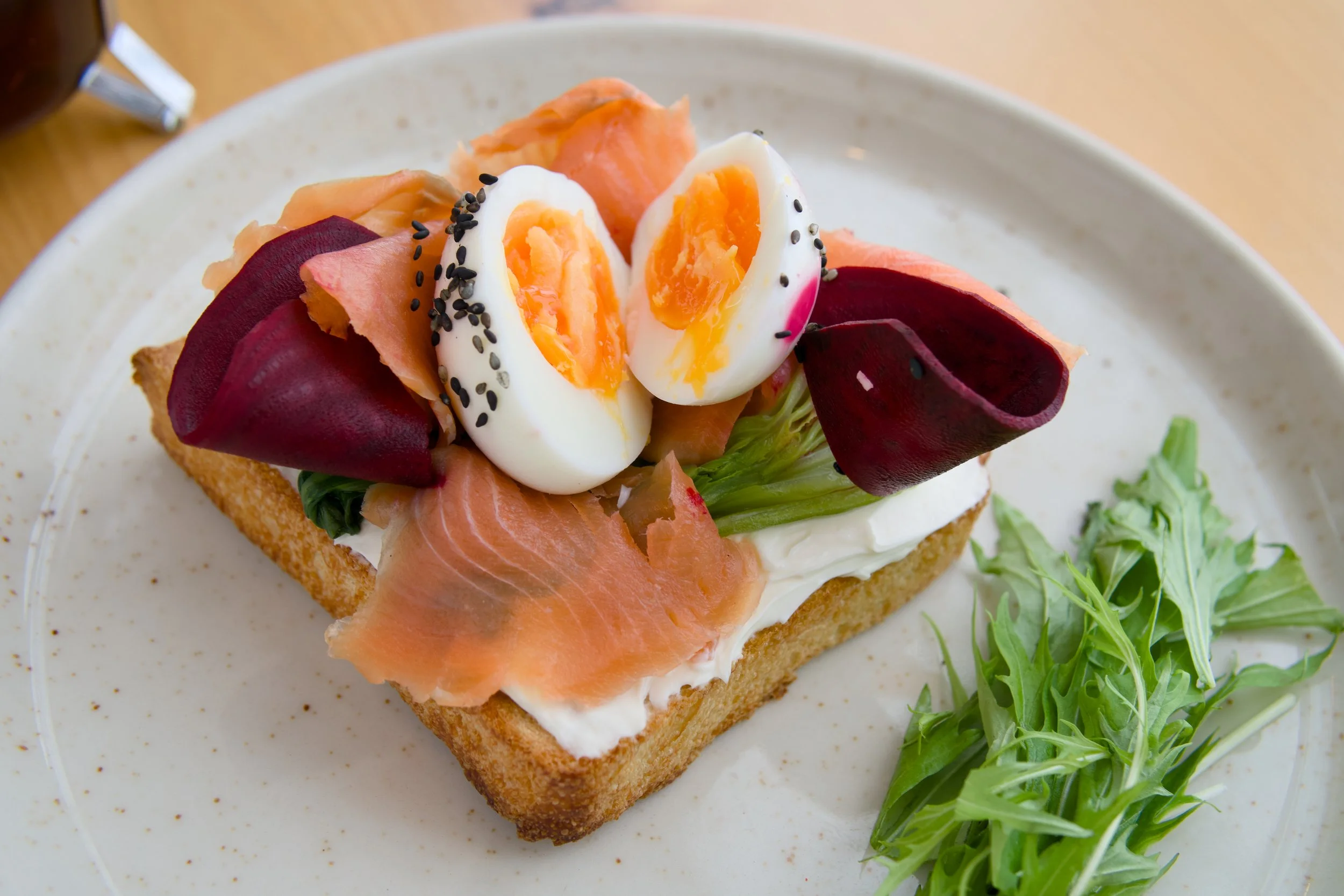
Assembly: 90-Second Breakfast
With all components prepped, morning assembly was almost comically fast:
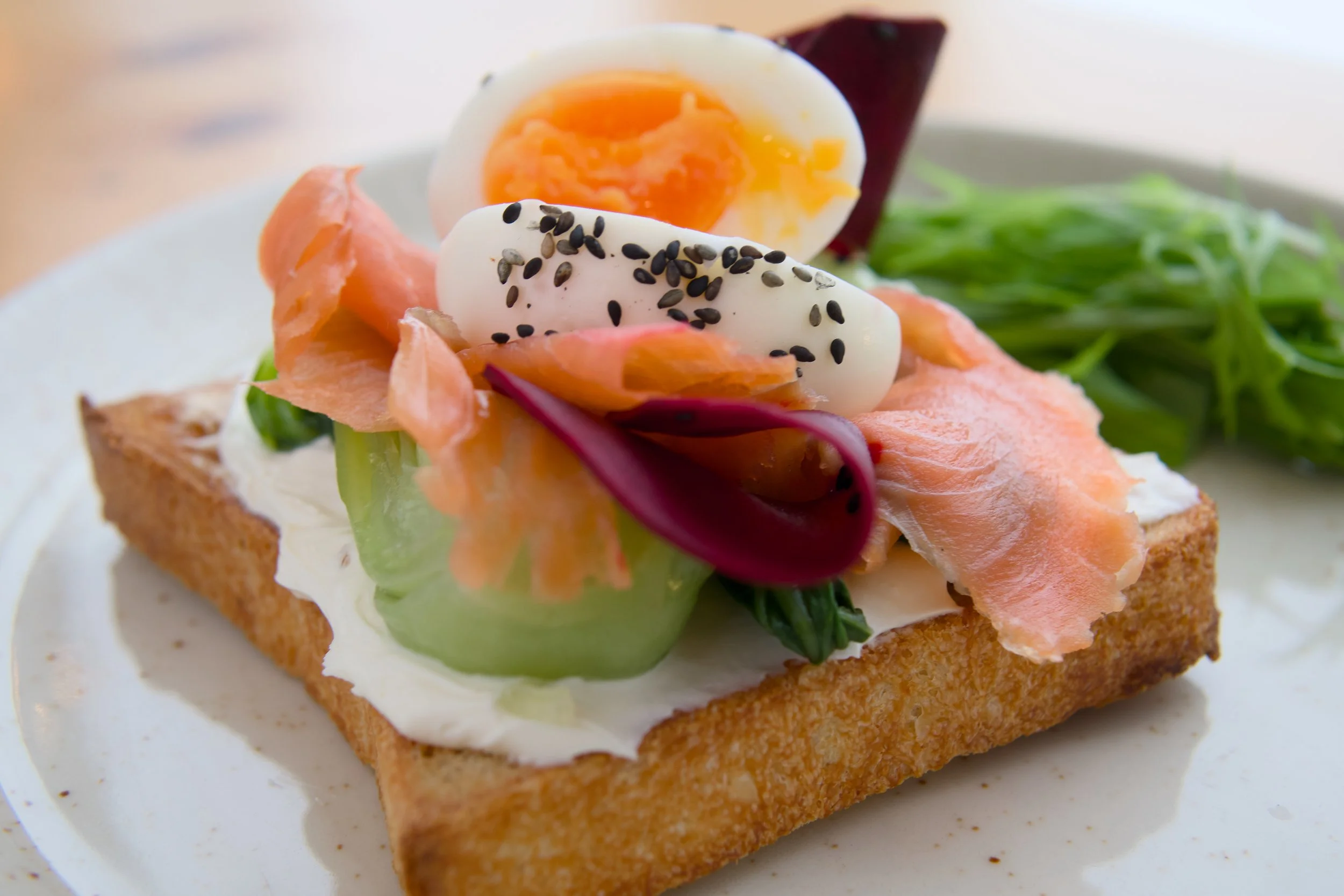
Slice house-made bread, toast in our salamander - 2 minutes
Spread whipped cream cheese on toast - 10 seconds
Layer thin-sliced cured salmon - 15 seconds
Add pickled beet slices for color and acid - 10 seconds
Place steamed bok choy for greens - 10 seconds
Halve a pre-cooked soft egg, place on top - 10 seconds
Sprinkle with black sesame seeds - 5 seconds
Plate with small salad garnish - 15 seconds
Total active assembly: maybe 90 seconds per plate.
But to the guest, it looked like complex breakfast preparation. House-made bread, house-cured salmon, perfectly cooked egg, house-pickled vegetables.
Why This Worked for Ski Resort Breakfast
Nutritional Balance:
Protein: salmon and egg
Carbs: bread (not too much, just one slice as base)
Fats: cream cheese and salmon (healthy fats, not heavy)
Vegetables: bok choy and pickled beets
Acid: pickles and cream cheese cut through richness
People could eat this at 7am and be skiing by 8:30am without feeling heavy or sluggish.
Visual Appeal:
The colors alone sold the dish: pink salmon, orange egg yolk, deep red beets, white cream cheese, green bok choy, golden toasted bread, black sesame seeds.
It looked like a dish that took thought and care, which it did - just not in the moment of assembly.
Speed of Service:
Critical for resort breakfast when everyone's trying to get to the lifts. We could fire 10 of these in the time it took to make 3 omelets.
Dietary Considerations:
Easily modified for dietary needs:
No eggs? Skip them
Dairy-free? Use vegan cream cheese alternative
Gluten-free? Swap the bread and use rice crackeres (housemade of course)
The component-based assembly made modifications simple rather than requiring recipe reconstruction.
What This Teaches About Recipe Development Services
This breakfast became a lesson in practical food formulation services: you don't always need to make everything from scratch to have quality "house-made" offerings.
Strategic In-House Production:
We made what made sense to make:
Bread from existing dough production (minimal additional labor)
Cured salmon from abundant local raw material (cost savings and quality control)
Pickled vegetables from farm supply (value-added preservation)
We bought what made sense to buy:
Cream cheese (local, excellent, impossible to improve on)
Eggs (Japanese egg quality is so good, why try to source them differently)
The In-House Production Balance
Back in Dublin, I think about that bread situation often. We "made it in-house" but we were really just adapting something we were already making.
Is that cheating? I don't think so.
The goal of in-house production isn't to make everything possible - it's to make the things where you can add value through quality, cost savings, or customization.
Our pizza dough bread was better for sandwiches than shokupan would have been - crusty, sturdy, perfect texture for open-faced applications. Making it ourselves meant we could bake fresh daily in quantities we needed.
The cured salmon was genuinely better than what we could buy and cost less. That's worth doing in-house.
The cream cheese? We'd have been idiots to try making that when perfect local versions were readily available.
Smart recipe development means knowing the difference.
The Real Lesson
Those breakfast sandwiches taught me that "house-made" isn't about making everything - it's about making the right things.
Good recipe engineering uses available resources efficiently. We had pizza dough production, so we made bread. We had access to fresh salmon, so we cured it. We had farm beets, so we pickled them.
We didn't try to make cream cheese, grow our own bok choy, or raise chickens for eggs. That would have been house-made for the sake of saying so, not because it improved quality or made operational sense.
The breakfast guests got was genuinely house-made where it mattered, efficiently sourced where local products were excellent, and designed to be nutritious without being heavy - perfect for a ski resort morning.
That's better than any purist approach that ignores practical reality.