Italian Meatballs Meet Japanese Umami: When Three Cultures Solve Your Burger Trim Problem
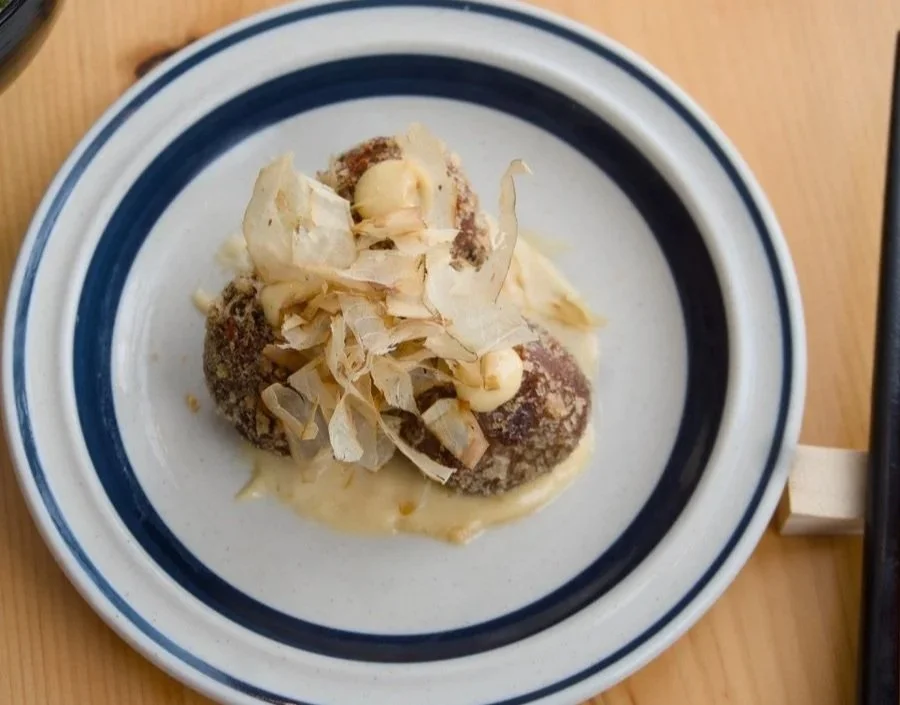
How leftover wagyu, breakfast bread, and bonito flakes became Niseko's most unexpected snack
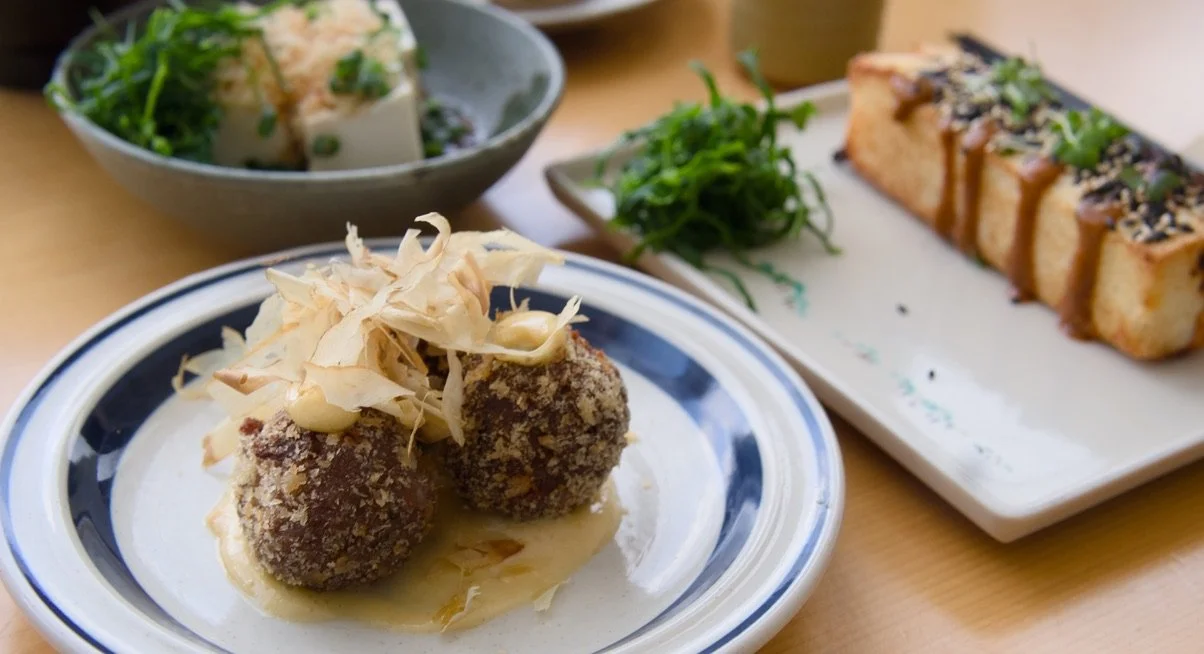
I never expected to be making Italian meatballs in a Japanese ski resort, but here's what happens when you have burger trim from wagyu patties, yesterday's breakfast bread, and a walk-in full of Japanese ingredients: you start experimenting.
At Milky House Country Inn, we had wagyu burgers on the menu. Premium ground beef and pork that we'd portion for other prep, which meant trim and leftover mix almost daily. Instead of forcing burgers on the staff meal every night, we started making meatballs and serve to our Spinoff bar.
These became something else entirely: Italian technique, Japanese ingredients, Spanish sauce, and somehow it all worked perfectly as a bar snack you could eat with your hands while drinking.
A Brief (and Incomplete) History of Italian Meatballs
Before I tell you what we did in Niseko, let's talk about what Italian meatballs actually are - because the red-sauce-and-spaghetti version most people know is barely Italian at all.
Regional Variations:
In Italy, meatballs (polpette) vary dramatically by region:
Southern Italy (Calabria, Sicily, Campania):
Often include raisins and pine nuts
Sometimes served in tomato sauce, but not always
Smaller size, meant as a course on their own
The source of Italian-American "Sunday gravy" meatballs
Central Italy (Rome, Abruzzo):
Larger, simpler seasoning
Often fried and served without sauce
Pecorino Romano cheese, lots of garlic
Bread soaked in milk or water for moisture
Northern Italy (Lombardy, Emilia-Romagna):
Lighter seasoning, sometimes include mortadella
Often braised in broth rather than tomato
Served as second course with vegetables
Less garlic, more subtle flavors
The Great Meatball Divide:
Here's something most people don't know: in much of Italy, putting meatballs on spaghetti is considered weird. Meatballs are a separate course, served after pasta, not with it.
The spaghetti-and-meatballs thing is Italian-American invention - immigrants combining their Sunday meatballs with pasta because protein was expensive and pasta was filling. It's delicious, it's tradition now, but it's not Italian tradition.
Cooking Methods:
Traditional Italian meatballs are prepared three main ways:
Fried: Rolled and fried in olive oil until crusty outside, tender inside. Served immediately, often with lemon.
Braised in sauce: Fried first for crust, then simmered in tomato sauce to finish cooking. The sauce gets richness from the meat.
Baked: Less common traditionally, more of a modern convenience method. Doesn't develop the same crust as frying.
The Soaking Bread Technique:
Almost all regional variations include bread soaked in liquid - milk, water, or sometimes stock. This isn't filler, it's technique. The soaked bread creates moisture and tender texture that pure ground meat cannot achieve. Without it, you get dense, dry meatballs.
What We Did in Niseko: The Fusion Approach
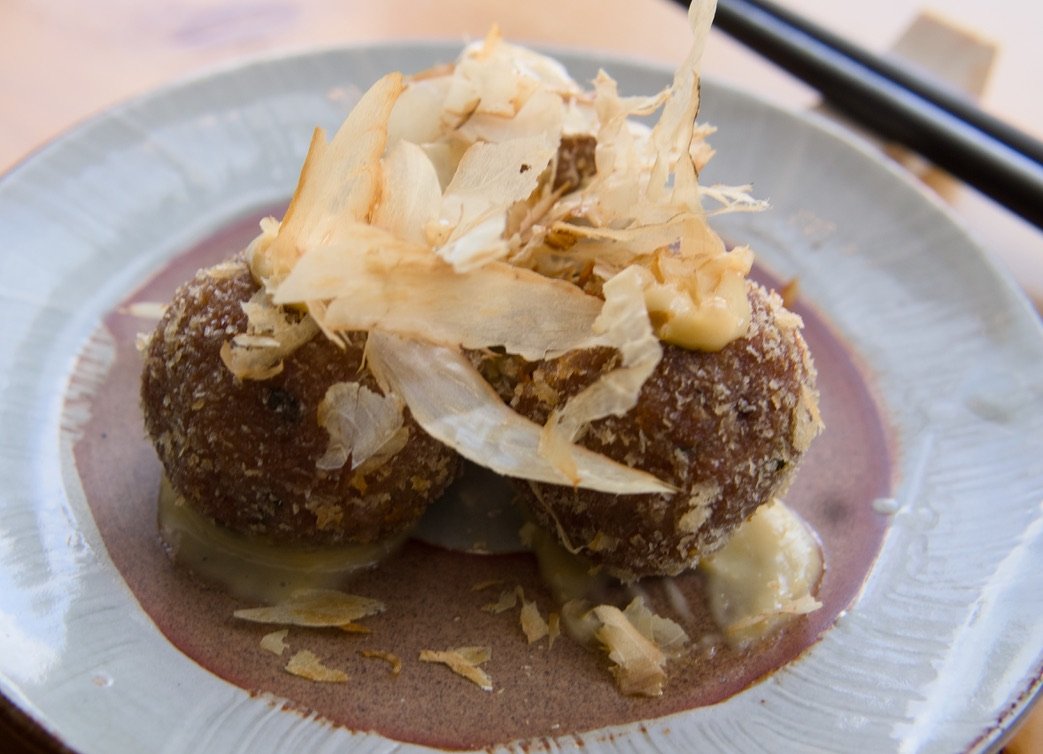
Our meatballs kept the Italian structure but swapped almost every other element for Japanese ingredients.
The Meat Base:
We used the trim from our wagyu burger production - a blend of beef with the add of 40% ground pork that we were already grinding daily.
Batch it into meatballs, freeze them, and you've got bar snacks ready to fry from frozen whenever you need them.
Bread Soaking - The Dashi Method:
Here's where it got interesting. Traditional Italian? Soak stale bread in milk.
Our version? Soak leftover shokupan (Japanese milk bread from breakfast service) in dashi.
This is real recipe engineering - we had two "waste streams" (leftover ground meat, day-old bread) and one liquid we always have in Japanese kitchens (dashi). Combining them created something better than the traditional version.
Dashi adds umami depth that milk never could. The bread still provides moisture and tender texture, but now it's also contributing glutamates and that subtle ocean flavor from kombu and bonito.
Miso Instead of Pecorino:
Traditional Roman meatballs use aged Pecorino Romano cheese for salty, tangy, sharp flavor.
We substituted white miso paste.
Miso provides the same savory depth and slight tang but works better with the Japanese flavor profile we were building. Plus, we had miso in the kitchen for daily use - we weren't keeping aged Italian cheese in stock.
Garlic - Still There, But Different:
Italian meatballs typically use a lot of garlic, minced or grated into the meat mixture.
We kept the garlic concept but added it differently. The meatballs themselves had minimal garlic - just enough for background flavor. The punch came from the aioli sauce, which we'll get to.
The Frying Technique:
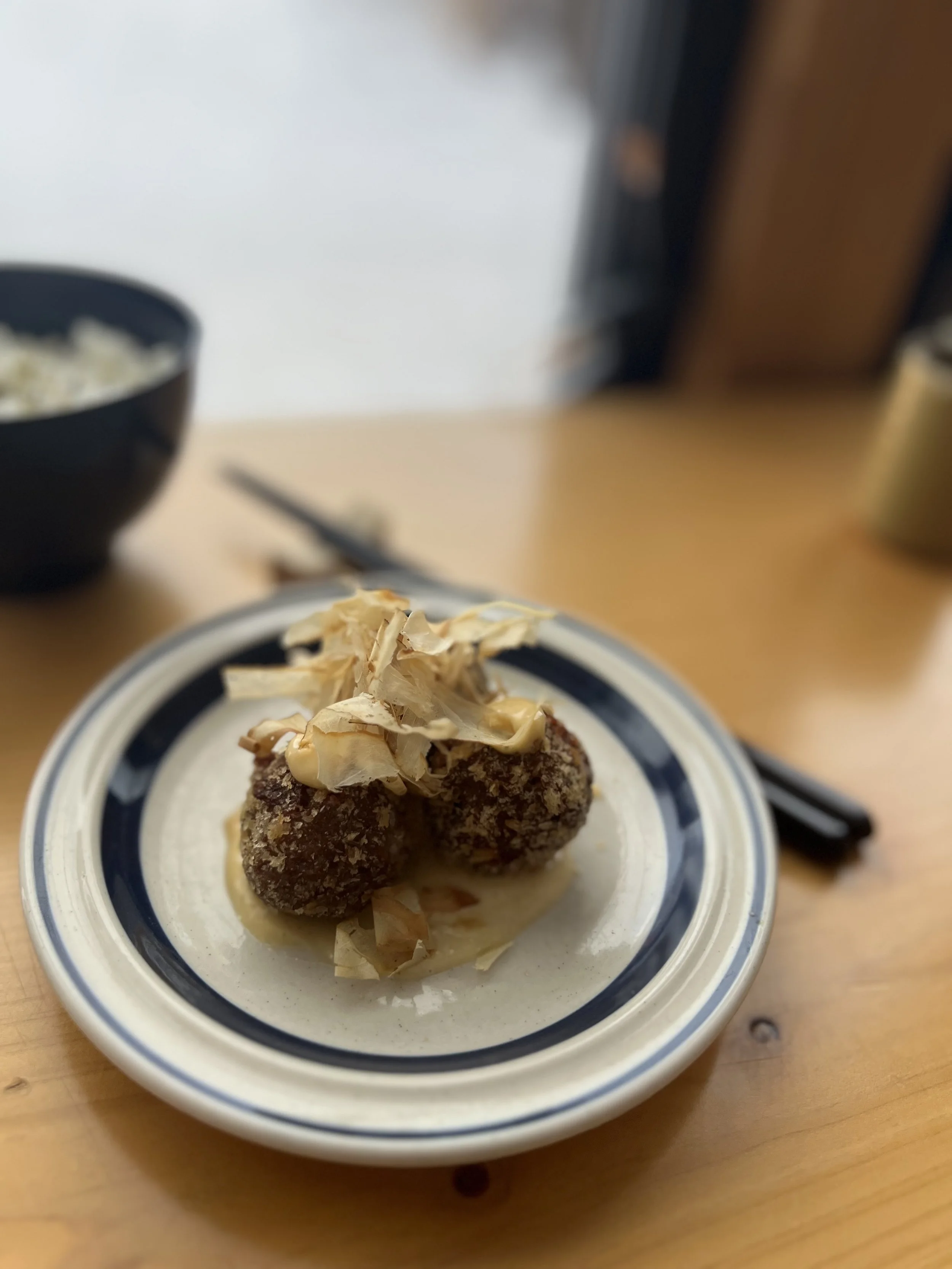
This part stayed Italian. Deep fry in hot oil until deeply golden and crusty outside, cooked through inside.
But here's the key for restaurant menu development: we'd make batches of 250-300 meatballs during slow periods, chill blast them to freeze quickly, then store frozen. During service, we'd fry them straight from frozen - no thawing needed.
4-5 minutes at 175°C from frozen if you make about 25g each to perfect. This meant we could have bar snacks ready any time without active prep during service.
The Aioli: Spanish Technique, Japanese Ingredients
Aioli is technically Spanish/Provençal - emulsified garlic and olive oil. Modern versions add egg yolk to stabilize (basically garlic mayonnaise).
Our Version:
We made aioli with Japanese spring garlic (the young, green shoots before the bulb fully develops) and yuzu juice.
Spring garlic is milder, slightly sweet, with fresh green flavor instead of the sharp bite of mature garlic. It works in raw applications like aioli without being overwhelming.
Yuzu juice replaced the traditional lemon juice. If you've never had yuzu, imagine lemon with floral notes and slight bitterness - more complex, more interesting.
The combination created an aioli that tasted fresh and bright but distinctly Japanese, not Mediterranean.
Katsuobushi: The Final Layer
What is Katsuobushi?
Katsuobushi (often shortened to katsuo) is skipjack tuna that's been:
Filleted
Boiled
Smoked repeatedly over hardwood
Inoculated with beneficial mold (Aspergillus glaucus)
Dried and aged for months
The result is one of the hardest food products in the world - literally as hard as wood. It gets shaved paper-thin for use in cooking.
Those thin shavings are what we call bonito flakes. When you put them on hot food, they wave and dance from the heat currents - it looks alive.
Why We Used It:
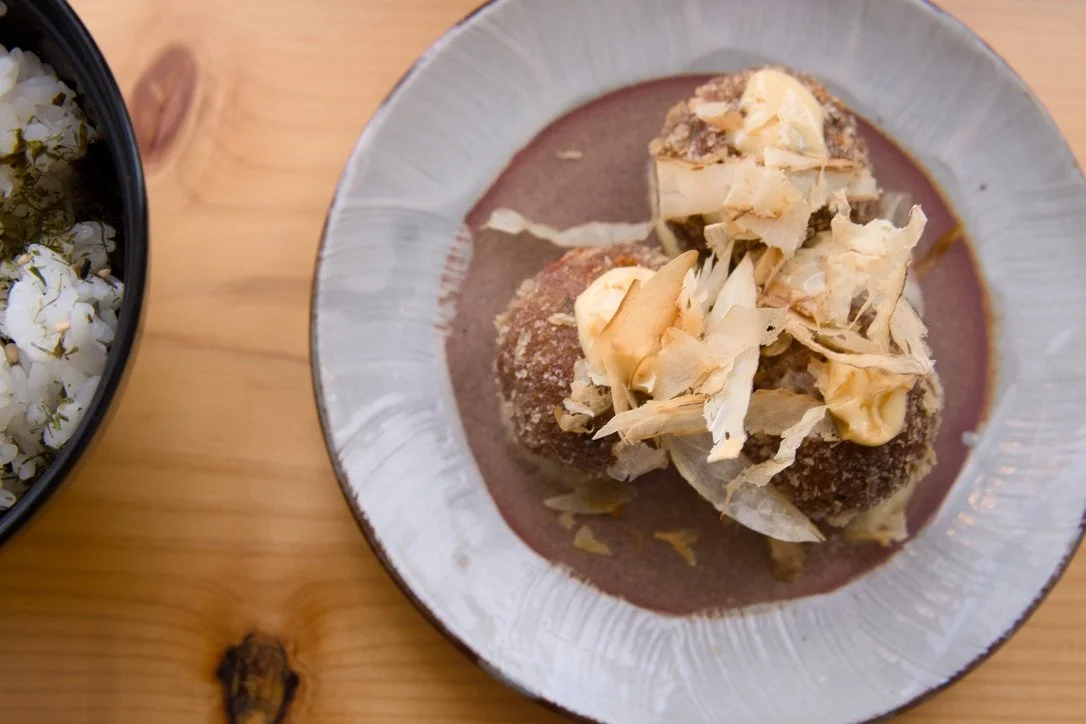
Aesthetically, it's fun. The bonito flakes on hot meatballs create this movement that makes the dish visually interesting.
But practically, katsuobushi adds another layer of umami. The meatballs already had dashi-soaked bread and miso. The bonito flakes on top reinforce those flavors while adding a subtle smokiness from the traditional production method.
In takoyaki (octopus balls), katsuobushi is traditional. We borrowed that visual reference for our meatballs since they're similar in concept - fried balls of delicious stuff.
What This Teaches About Menu Development Services
This meatball became a case study in practical menu and recipe development for several reasons:
Waste Reduction:
Burger trim becomes profitable bar snack
Day-old breakfast bread gets repurposed
Single ingredient (dashi) serves multiple functions
Operational Efficiency:
Batch production during slow periods
Frozen storage for service flexibility
Fry-from-frozen for zero advance prep
Cultural Fusion Done Right:
Respects Italian technique (structure, frying method)
Uses available Japanese ingredients appropriately
Creates something new rather than forcing authenticity
Cost Management:
Zero additional ingredient costs (all from existing inventory)
Transforms "waste" into profit center
Scales easily for volume production
The Practical Application: Batch Work Systems
The real key to this dish working commercially was the batch-and-freeze system.
Production Flow:
Every three days or so (whenever we accumulated enough burger trim), we'd do a meatball batch:
Mix meat with dashi-soaked bread, miso, minimal garlic, seasonings
Roll into uniform 25g portions (we used a small ice cream scoop for consistency)
Chill blast to freeze solid in 30-40 minutes
Bag and store frozen
This created a rolling inventory of ready-to-cook bar snacks that required zero prep during service.
Service Flow:
When an order came in (usually 3-4 meatballs per portion):
Drop frozen meatballs in fryer - 4-6 minutes
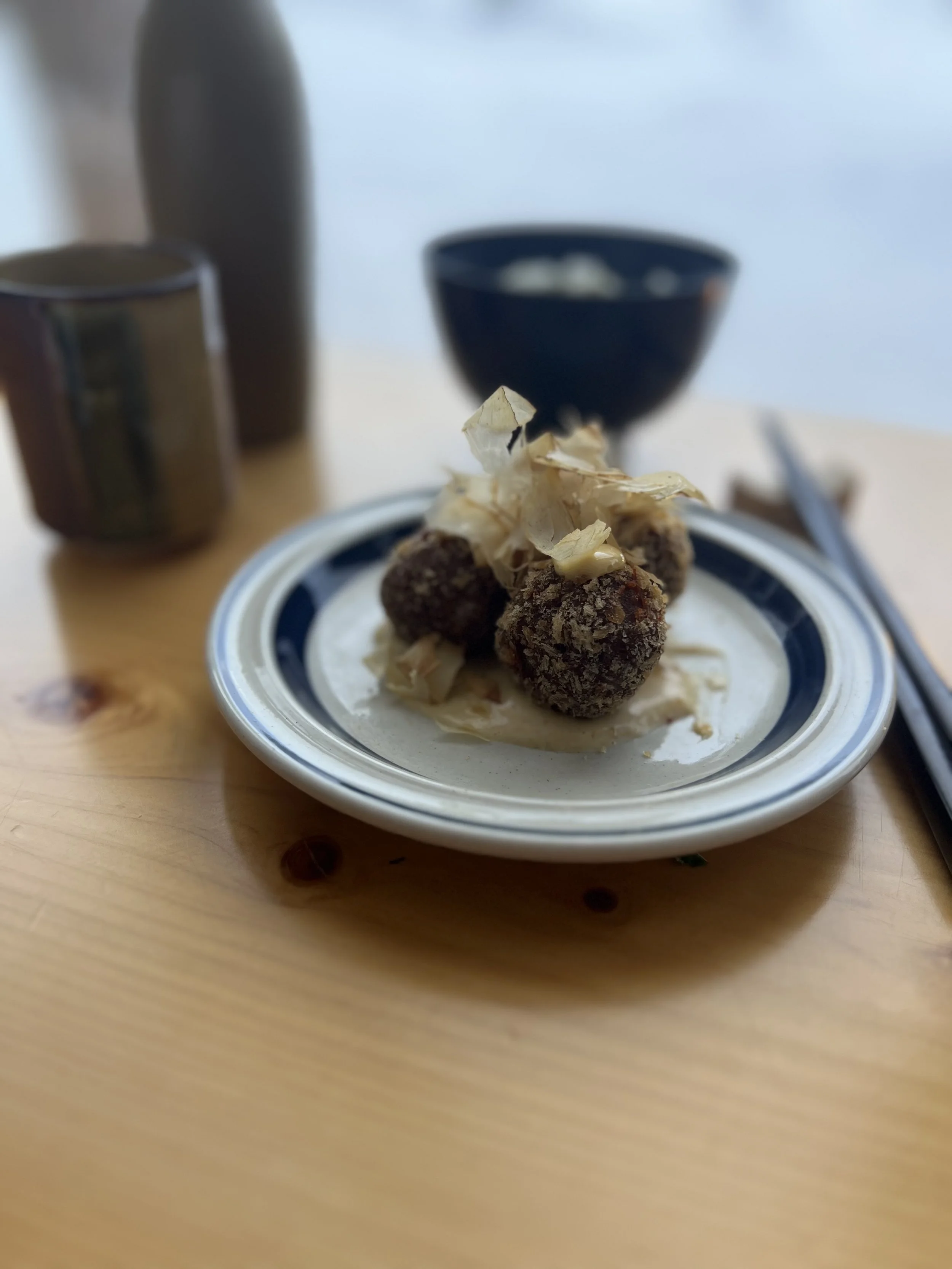
Drain, plate over aioli
Top with katsuobushi and serve
Total active service time: about 30 seconds of work, rest is just frying time.
For bar service especially, this was perfect. The bartender could manage it without kitchen help, and customers got hot, fresh food that tasted like it took effort to make.
Why This Works for Any Restaurant
The specific ingredients we used were Japanese because we were in Japan. But the principle works for restaurant menu development anywhere:
Identify Your Waste Streams:
Burger trim, sausage trim, any ground meat excess
Day-old bread from any source
Leftover stock or broth
Apply Batch Technique:
Mix meatball base with soaked bread
Season for your cuisine (Italian, Asian, Middle Eastern, whatever)
Portion, freeze, store
Create Service Efficiency:
Fry from frozen during service
Sauce and garnish take seconds
Customers get "made-to-order" experience from frozen components
Cultural Adaptation:
Italian meatballs? Traditional seasonings, tomato sauce
Asian meatballs? Ginger, soy, sesame garnish
Middle Eastern? Cumin, coriander, tahini sauce
The technique is universal. The flavors are whatever works for your concept.
Three Cultures, One Plate
Back in Dublin now, I keep thinking about those meatballs: You don't need to choose between authenticity and practicality.
The Italian technique was authentic - bread-soaked ground meat, fried until crusty.
The Japanese ingredients were authentic - dashi, miso, yuzu, katsuobushi used appropriately.
The Spanish aioli was authentic - proper emulsion technique with good ingredients.
None of it was "fusion confusion" - that thing where you throw random cultural elements together and hope they work. Each component had a reason, each technique solved a problem, each ingredient was used the way it's meant to be used.
That's the difference between gimmicky fusion and thoughtful integration. Respect each tradition, understand why the techniques work, then adapt based on what you actually have available.
The Real Lesson
Those wagyu trim meatballs taught me that the best menu development services don't come from trying to create something completely original. They come from solving actual kitchen problems with available ingredients and appropriate techniques.
We had burger trim to use. We had leftover bread. We had Japanese ingredients in the kitchen. We needed bar snacks that could work frozen for service flexibility.
The meatballs solved all of those problems while creating a dish that customers actually wanted to eat and could eat easily while drinking at the bar.
That's better than any "concept-driven" menu development that ignores operational reality.
Sometimes the best innovation is just paying attention to what you already have and asking "what else could this become?"