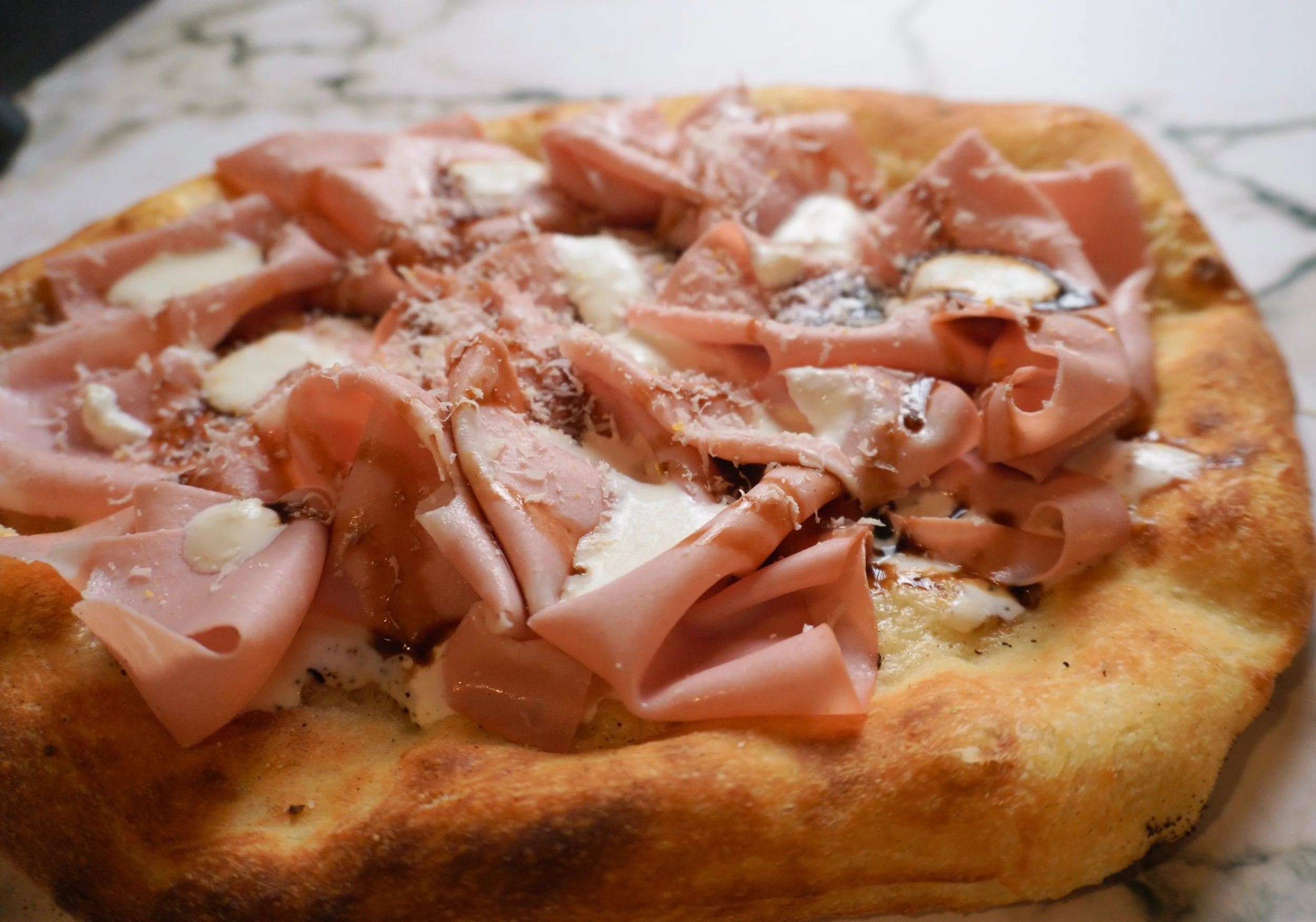
The Anatomy of a Modern Classic: Mortadella Favola, Burrata, and the Dublin Stout Twist
If you have stepped into a contemporary pizzeria or trendy wine bar over the last few years, you have undoubtedly run into the pairing of Mortadella and Burrata. It has become the darling of modern menus, a certified crowd-pleaser that dominates social media feeds and keeps tables turning.
But as a chef consultant in Dublin, my job during pizza recipe development isn't just to copy trends—it’s to deconstruct them, refine them, and add a signature twist.
The Burrata Phenomenon: Why It Took Over the World
To understand why this pizza works, we first need to look at the cheese. Burrata has experienced an unprecedented global boom. But what exactly is it, and how does it differ from other Italian classics? Unlike its cousin, Mozzarella di Bufala from Campania (made from tangy water buffalo milk), authentic Burrata is crafted from cow’s milk. Cow's milk provides a cleaner, sweeter lactic taste.
The traditional production is a beautiful, high-wire artisan process:
The Pouch (Pasta Filata): Raw curds are stretched in boiling water until they form a shiny, elastic sheet of mozzarella dough. While hot, this dough is blown or hand-shaped into a hollow, delicate sack.
The Filling (Stracciatella): The interior isn't just loose cheese. Strands of that hot, stretched curd are pulled apart entirely by hand into frayed ribbons called straccetti ("little rags"). These threads are cooled and submerged into high-fat, sweet dairy cream (panna).
The Seal & Shock: The cold stracciatella is packed into the warm mozzarella pouch, pinched shut to create a hermetic seal, and immediately plunged into ice water to lock the cream inside.
If you dump a whole ball of cold Burrata onto a hot pizza, you encounter an operational nightmare: it bleeds water, makes the crust soggy, and creates a messy, uneven eating experience.
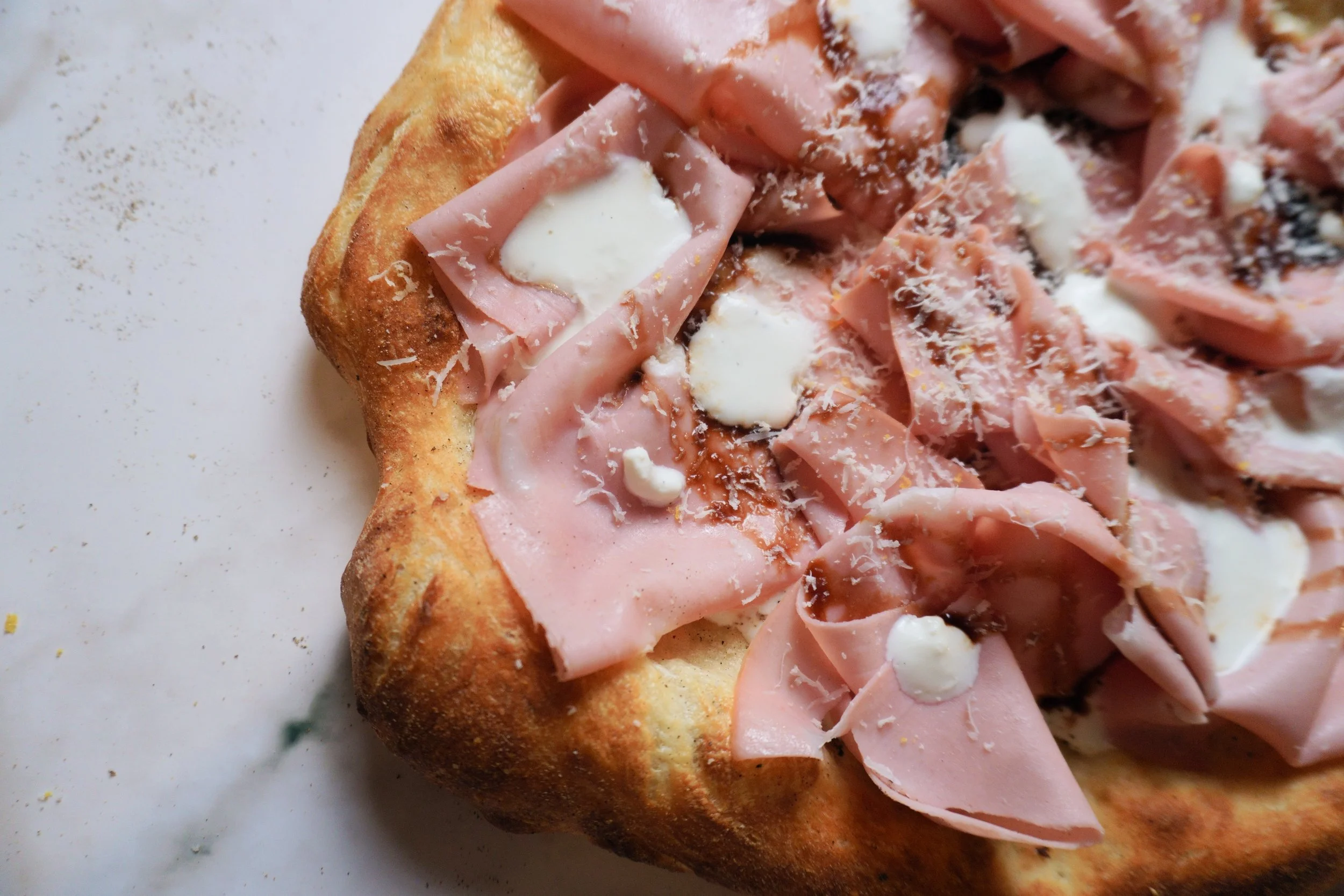
To solve this we put the Burrata into a blender. Blitzing it breaks down the outer skin and emulsifies the cream and cheese into a perfectly smooth, silky crema. Loaded into a squeezing bottle, we can apply it across the pizza in controlled "drops." Every single bite gets the exact same distribution of product.
The Meat: The Legend of Mortadella "Favola"
Not all mortadella is created equal. For this pizza, we are using Mortadella Favola (produced by the Palmieri family), a product that sits at the pinnacle of Italian charcuterie.
Favola is unique because it is the world’s first mortadella to be encased and cooked inside a natural pig's bladder rather than a synthetic plastic casing. It is then slowly baked in traditional stone ovens. This ancient method allows the meat to breathe as it cooks, resulting in an incredibly delicate and fragrant texture
The Great Pistachio Debate
In Italy, the inclusion of pistachios is a fierce regional debate. Traditionalists in Bologna—the birthplace of Mortadella—often lean toward senza pistacchio (without), focusing purely on the high-quality pork fat, garlic, and subtle spices. However, the export market and Southern Italy love it con pistacchio for that extra texture and color. Favola offers both, but its defining characteristic is always the unparalleled sweetness and purity of the meat itself..
The Dublin Twist: The Stout Glaze
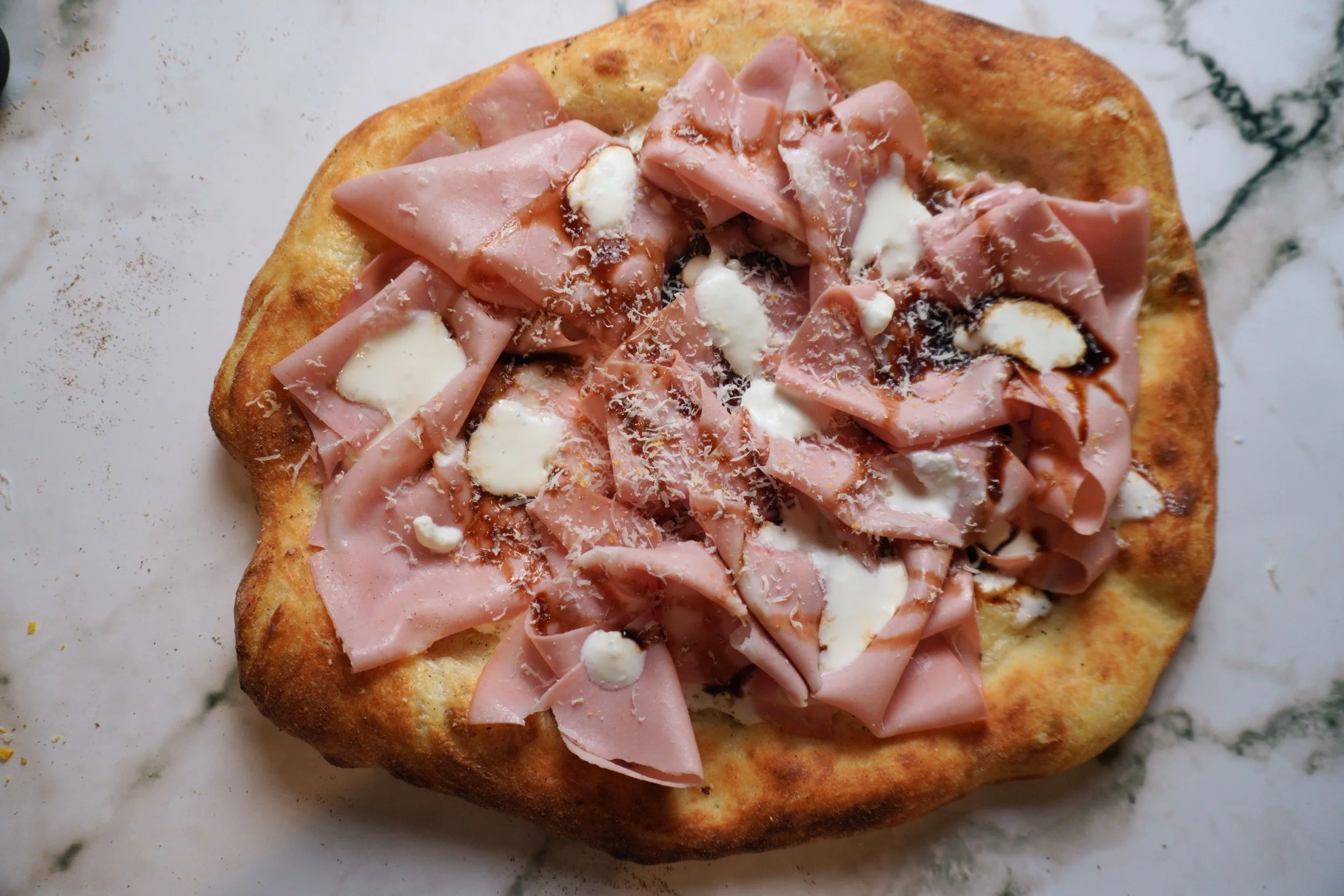
Traditionally, this pizza is finished with a drizzle of balsamic reduction, but I always want to add something local, to remember where we are. The deep, roasted chocolate and coffee notes of a classic Irish stout provide the perfect bitter counterpoint to the sweet, fatty elements of the Italian toppings.
How to Make a Kitchen-Ready Stout Glaze:
The Base: Combine 500ml of a robust Irish stout (like Guinness or a local craft stout) with 150g of dark brown sugar or molasses, and a splash of apple cider vinegar for a hit of brightness.
The Infusion: Add a sprig of rosemary and a few cracked black peppercorns to give it an aromatic edge.
The Reduction: Bring to a boil, then reduce the heat to a gentle simmer. Let it cook down slowly until it reduces by about two-thirds.
The Test: It should coat the back of a spoon with a glossy, syrupy consistency. Strain it and let it cool before transferring it to a squeeze bottle.
Drizzled over the pizza post-cooking, it cuts through the fats like a razor blade, balancing the entire flavor profile.