Zero-Waste Innovation: Transforming Asparagus Scraps and Yolks into Pizza Art
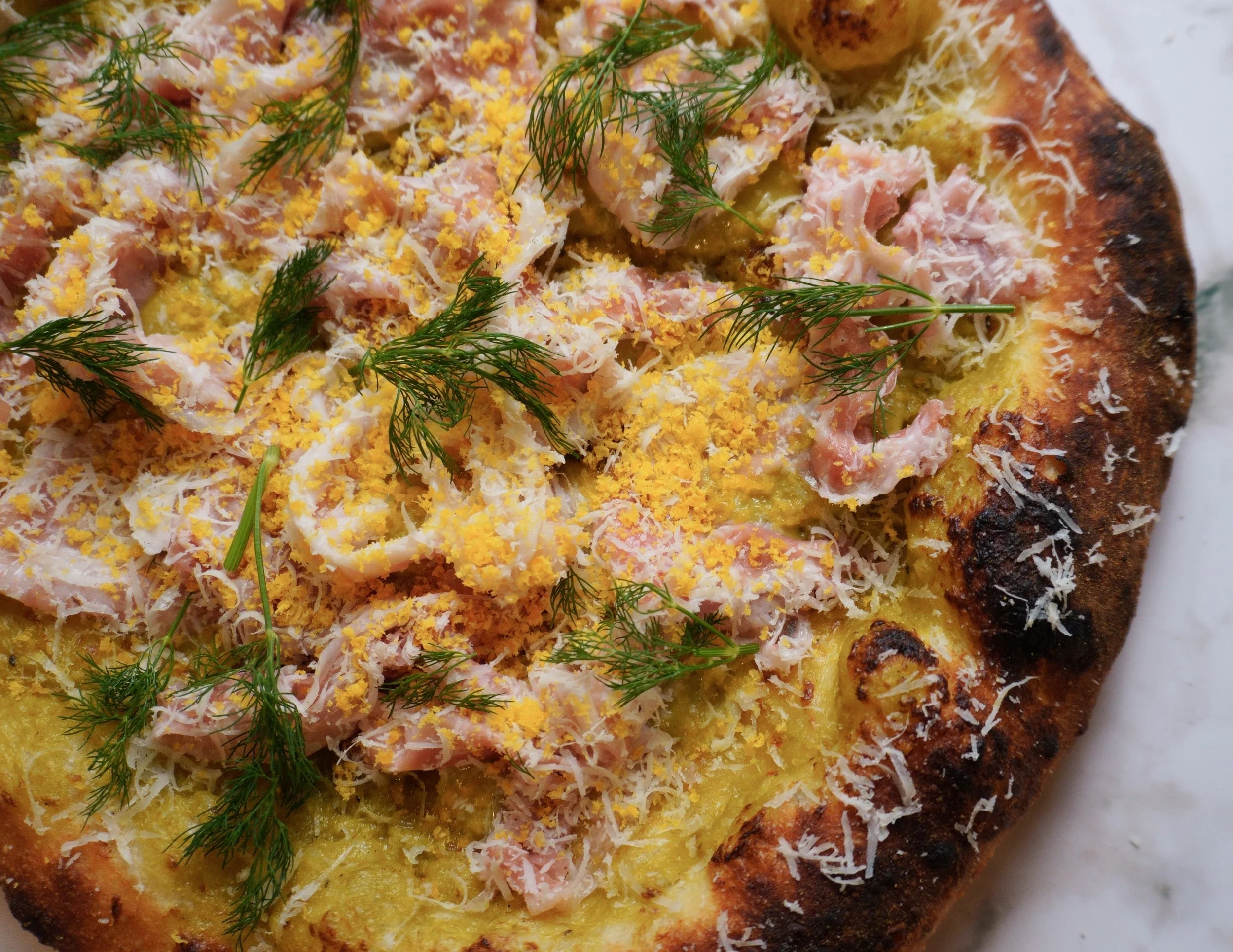
As a chef consultant, in the last 4-5 years, a large part of my work has been in pizza recipe development which isn't just about sourcing ingredients on the market but find scraps from the kitchen that can be manipulated and used.
The Base: Breathing Life into Asparagus Scraps
When preparing asparagus for premium sides or starters, kitchens routinely snap off the woody bottom ends. Usually, these go straight into the bin. Instead, we can use them to create a deeply flavorful- green base cream that replaces the traditional tomato sauce.
Here is the process:
The Sear: We hard-sear the leftover asparagus parts in a hot pan. This intense, quick heat introduces a subtle smokiness and a charred depth.
The Blend: The seared stems are blitzed with water, salt, and a vital splash of vinegar. The acid from the vinegar is crucial—it stabilizes the bright green chlorophyll so it doesn't turn a dull grey in the oven, and it cuts through the natural sulfurous notes of the vegetable. When is well cooked, than we bland it with some peresan and E.V. olive oil.
The Bake: Before the dough hits the oven, we spread this green cream across the base and scatter a light dusting of sharp Pecorino Romano.
The Meat: Pancetta Arrotolata vs. Pancetta Coppata
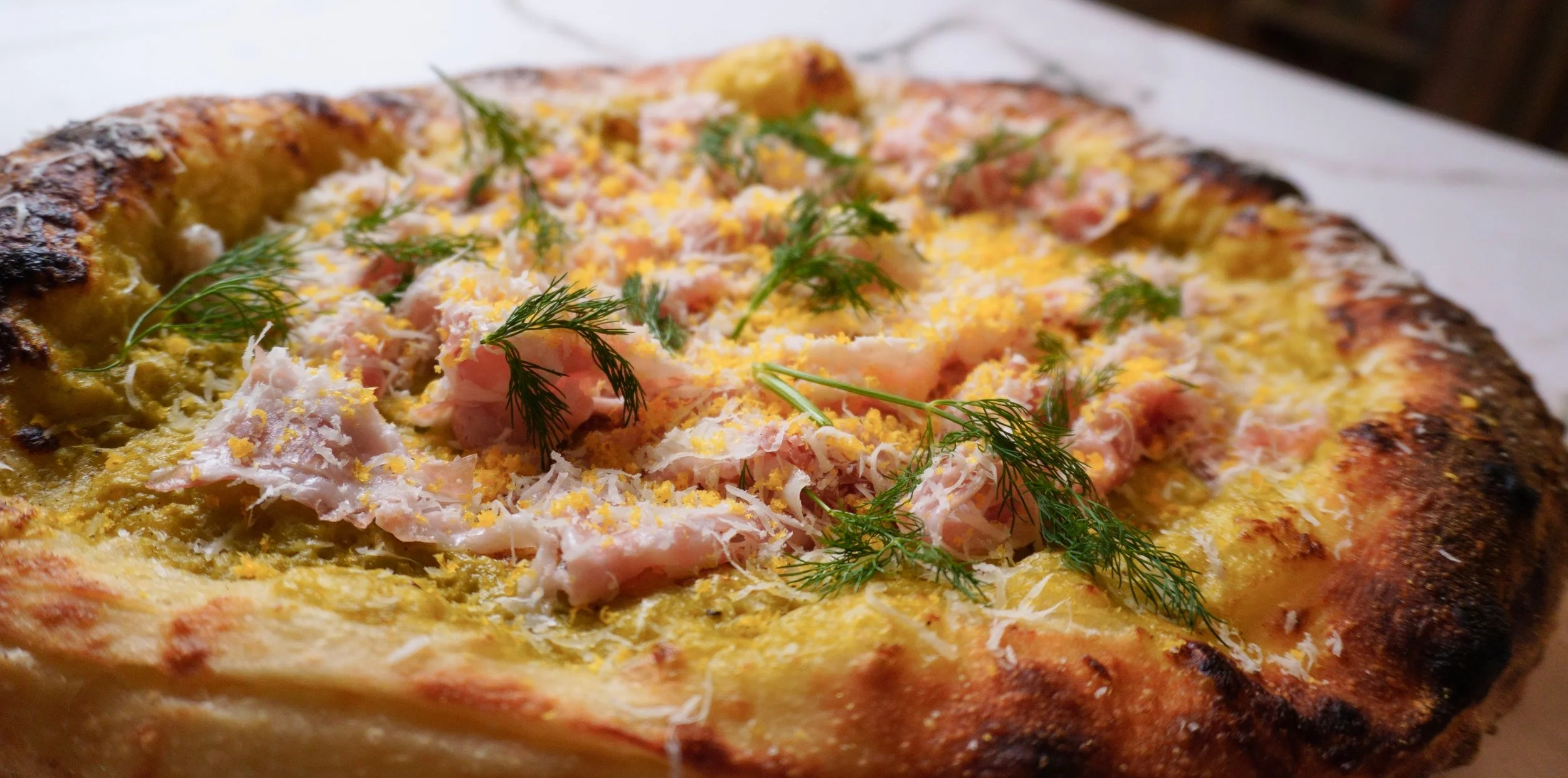
Once the pizza comes out of the oven, golden and charred, we immediately top it with paper-thin ribbons of Pancetta Arrotolata.
Understanding Italian salumi is essential for any modern pizzeria. There is a distinct difference between the types of cured pork belly you will encounter:
Pancetta Arrotolata (Rolled Pancetta): This is pure pork belly (pancia), seasoned with salt, cracked black pepper, and occasionally nutmeg or garlic, then tightly rolled into a cylinder and cured. It features beautiful, concentric rings of creamy fat and lean meat.
Pancetta Coppata: This is a hybrid charcuterie. It takes a piece of coppa (the leaner pork collar) and wraps it inside a layer of pork belly before rolling and curing. It is meatier and leaner in the center.
For this specific pizza, Pancetta Arrotolata is the superior choice. Because it is topped post-cooking, the residual heat radiating from the freshly baked crust gently warms the pancetta. The high-quality fat in the arrotolata begins to melt into the asparagus cream, turning translucent and creating a silky texture.
The Finishing Touches: Umami Gold Dust and Fresh Herbs
To elevate this Pizza to a true fine-dining standard, we finish it with a combination of cured egg yolk and fresh aromatics.
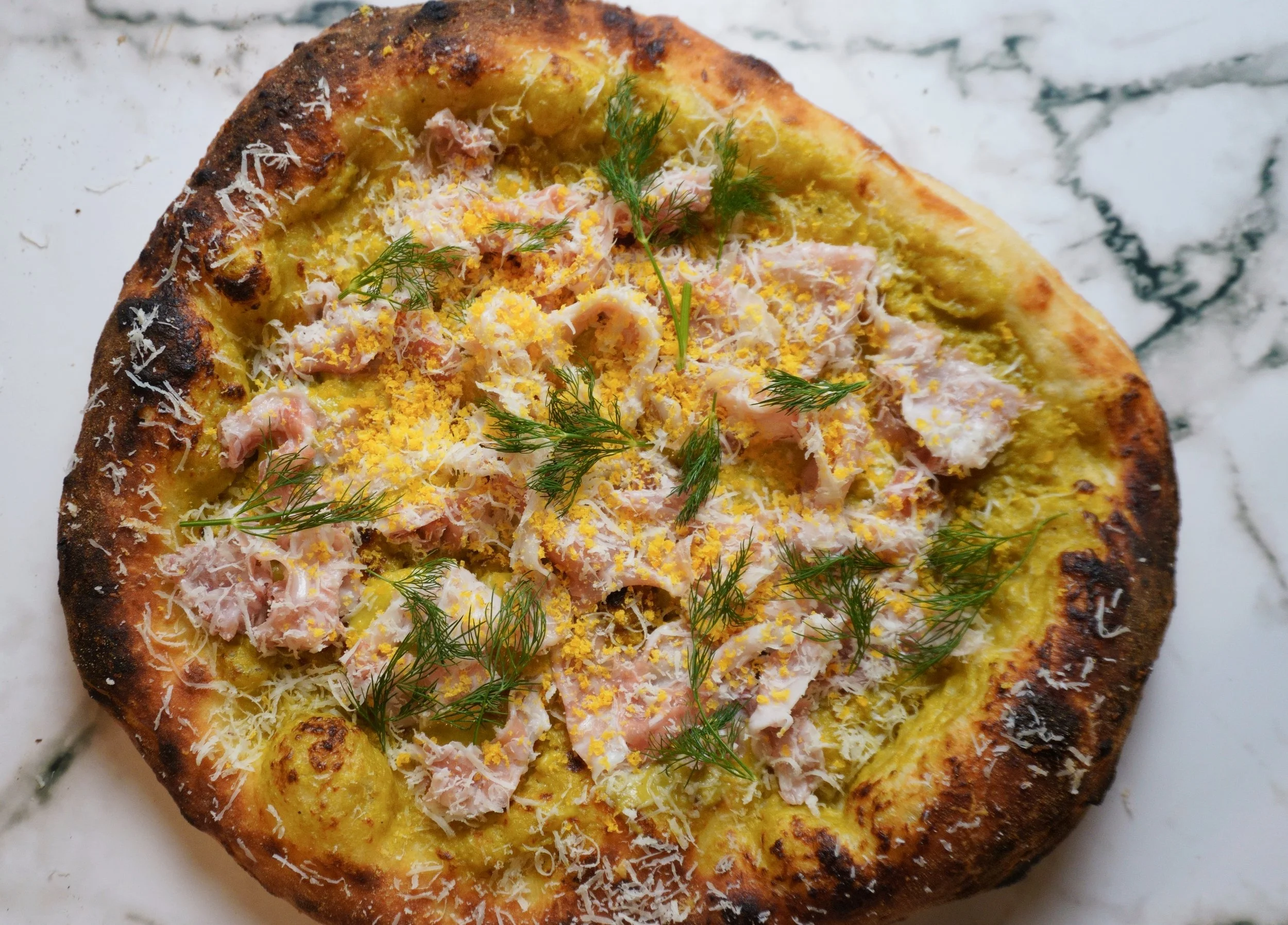
The egg yolks undergo a 48-hour cure buried in a 50/50 mix of salt and sugar. This process draws out the moisture, curing the yolk until it becomes firm, translucent, and deeply concentrated. After a quick rinse and dehydration, it can be grated over the pizza just like a hard cheese.
We grate these rich, umami-dense yolks side-by-side with more sharp Pecorino Romano, dusting the pizza in a vibrant yellow and white snow. Finally, we scatter fresh dill across the top. While dill isn't a traditional Italian pizza herb, its bright, feathery leaves and subtle aniseed notes provide the exact aromatic freshness needed to slice through the richness of the pork fat and the hearty depth of the asparagus .