Re-inventing the Wine Bar Menu: The Magic of "Padellino Torinese" and Raw Toppings
As a chef consultant in Dublin, I am frequently asked how to deliver a memorable, high-end gastronomic experience in venues that aren’t designed to be traditional restaurants. We are talking about wine bars, intimate enotecas, or spots with tight kitchen spaces where installing heavy extraction hoods or hiring a massive kitchen brigade simply isn't on the cards.
The answer, more often than not, lies in smart prep and an absolute reverence for the raw ingredients.
Today, I want to talk about a specific dough format that is quietly revolutionizing how we think about bread and pizza in agile kitchen setups: the Padellino Torinese. If you are currently looking for inspiration for your venue's pizza recipe development, this is a masterclass in sheer artisanal versatility.
A Slice of History: Turin, Not Naples
When most people think of thick, pan-baked pizza, their minds immediately drift south to Campania and the famous pizza nel ruoto. The Neapolitan ruoto is a rustic tradition—baked in copper or aluminum pans inside a blazing wood-fired oven. It uses a dough very similar to classic pizza or bread, yielding a soft, homely slice that tastes like a Sunday family lunch.
The Padellino Torinese (or pizza al tegamino), however, has a completely different DNA born in the north of Italy. It originated in Turin's historical rosticcerie (delis) and specialized pizzerias.
Here is how it works: the dough is proofed directly inside small, heavily oiled aluminum or iron pans (usually 20-25 cm in diameter) for a vital second rise. When it hits the oven, magic happens. The bottom of the dough lightly fries in the oil, creating an incredibly crispy, golden crust, while the interior remains tall, impossibly pillowy, and light as a cloud.
Kitchen Efficiency: One Dough, Endless Possibilities
From an operational standpoint, the padellino is a beautiful piece of menu engineering. If you already run a bakery or a pizzeria, you don't even need to develop a brand-new recipe from scratch. It is the perfect sub-product.
The exact same high-hydration dough you use for a pizza in pala (roman-style pala) or a classic focaccia can be portioned, dropped into the seasoned pans, and guided through a different proofing timeline.
But the real game-changer for a busy wine bar food menuis the service workflow:
The Prep Strategy: These padellino bases can be par-baked ahead of time. When a guest orders, you simply flash-bake or re-warm the base in a small countertop oven for a few minutes. It instantly revives—shattering crisp on the outside, steaming hot on the inside—ready to be topped completely raw.
Here's the brilliant part: padellino could use the same dough as focaccia or pizza al taglio. You don't need a separate production system.
Standard High-Hydration Dough:
75-80% hydration (750-800g water per 1000g flour)
Strong bread flour for structure
Long fermentation for flavor development (24-48 hours cold)
The Dish: Vitello Tonnato Reimagined
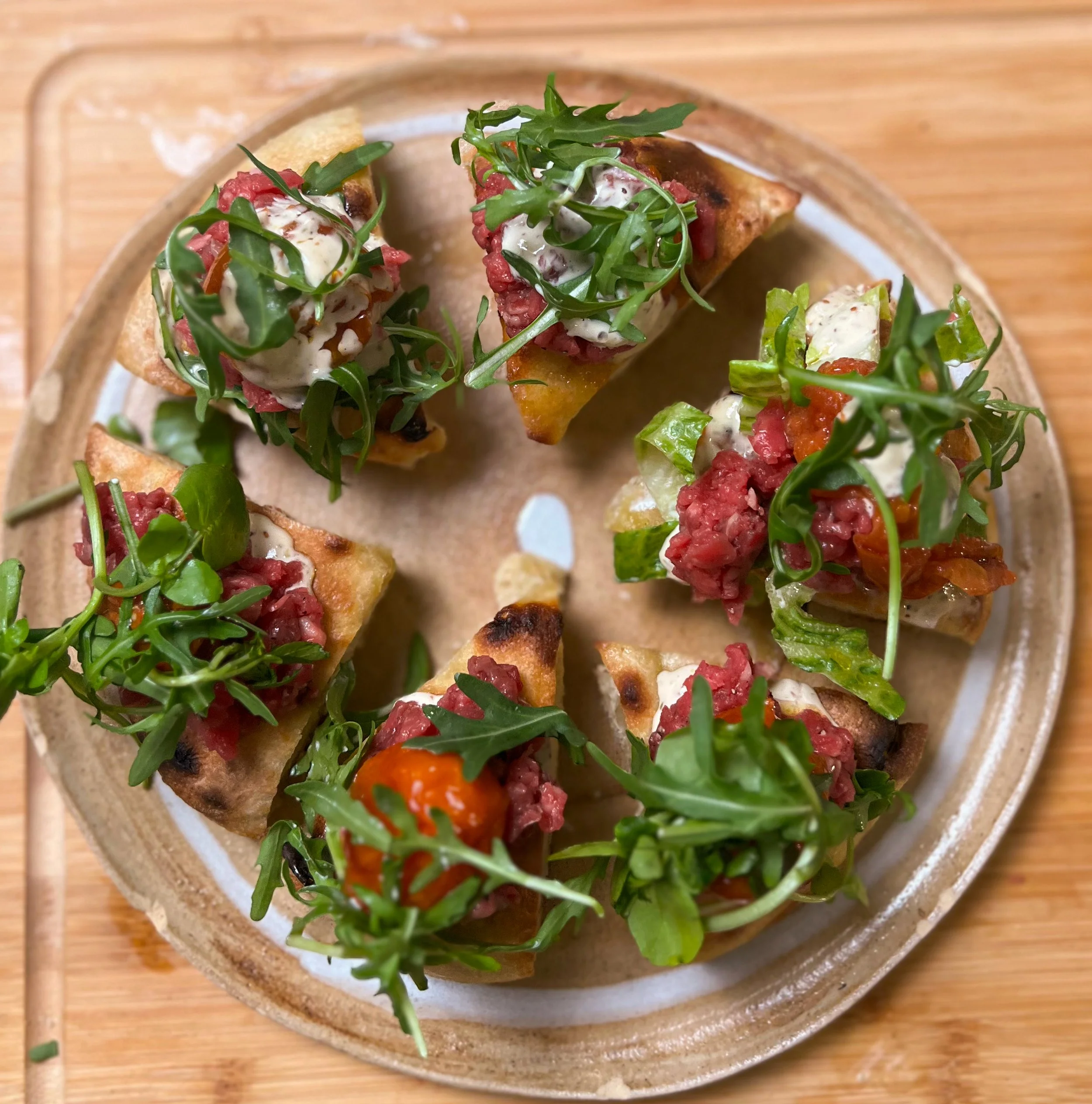
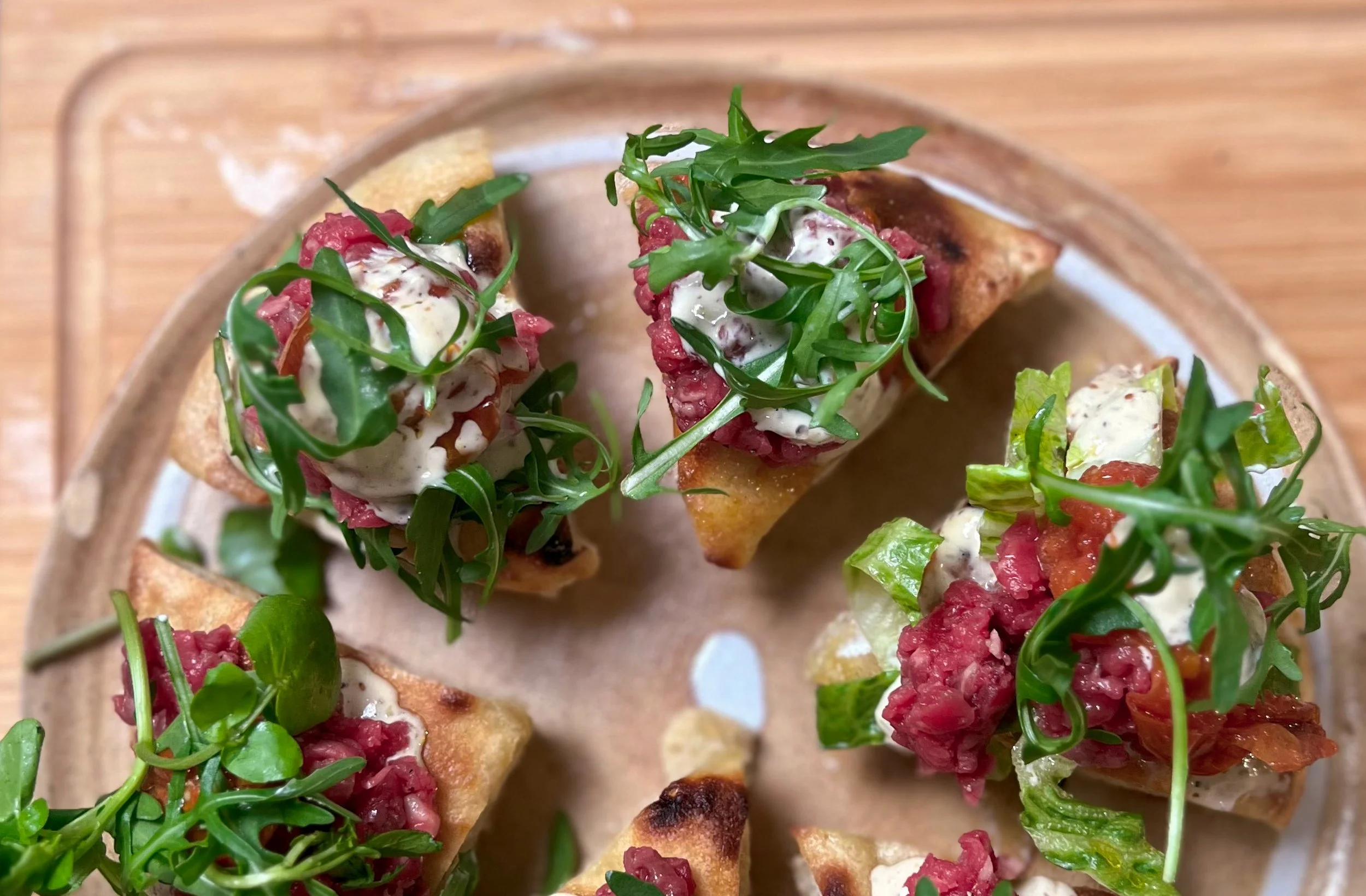
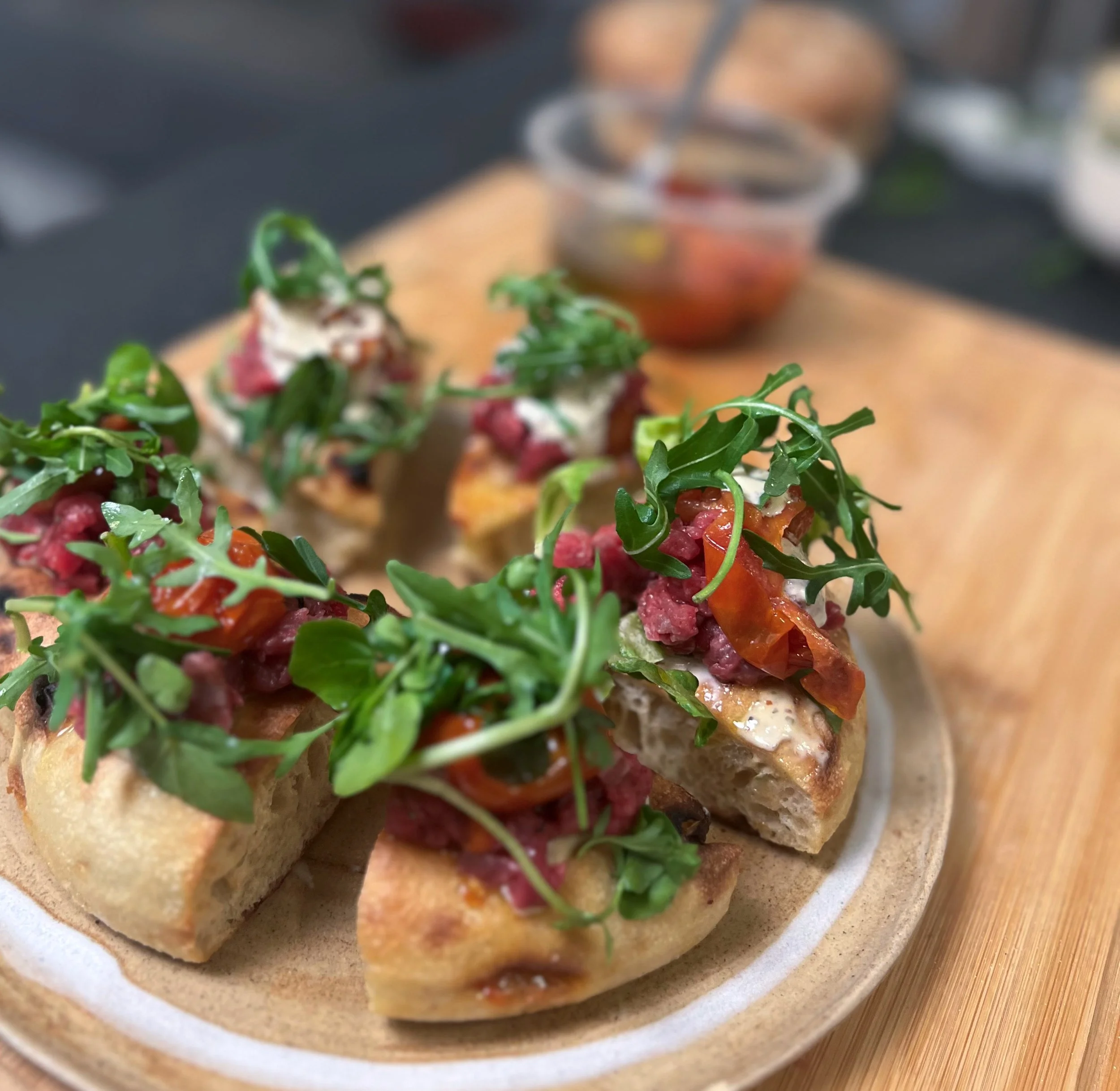
Instead of overloading the dough with heavy cheeses that need melting, the padellino shines brightest as a warm, structural canvas for premium, cold toppings. For this creation, I wanted to pay homage to a towering classic of Northern Italian cuisine—Vitello Tonnato—but elevate it with a punchier flavor profile that begs for a great wine pairing.
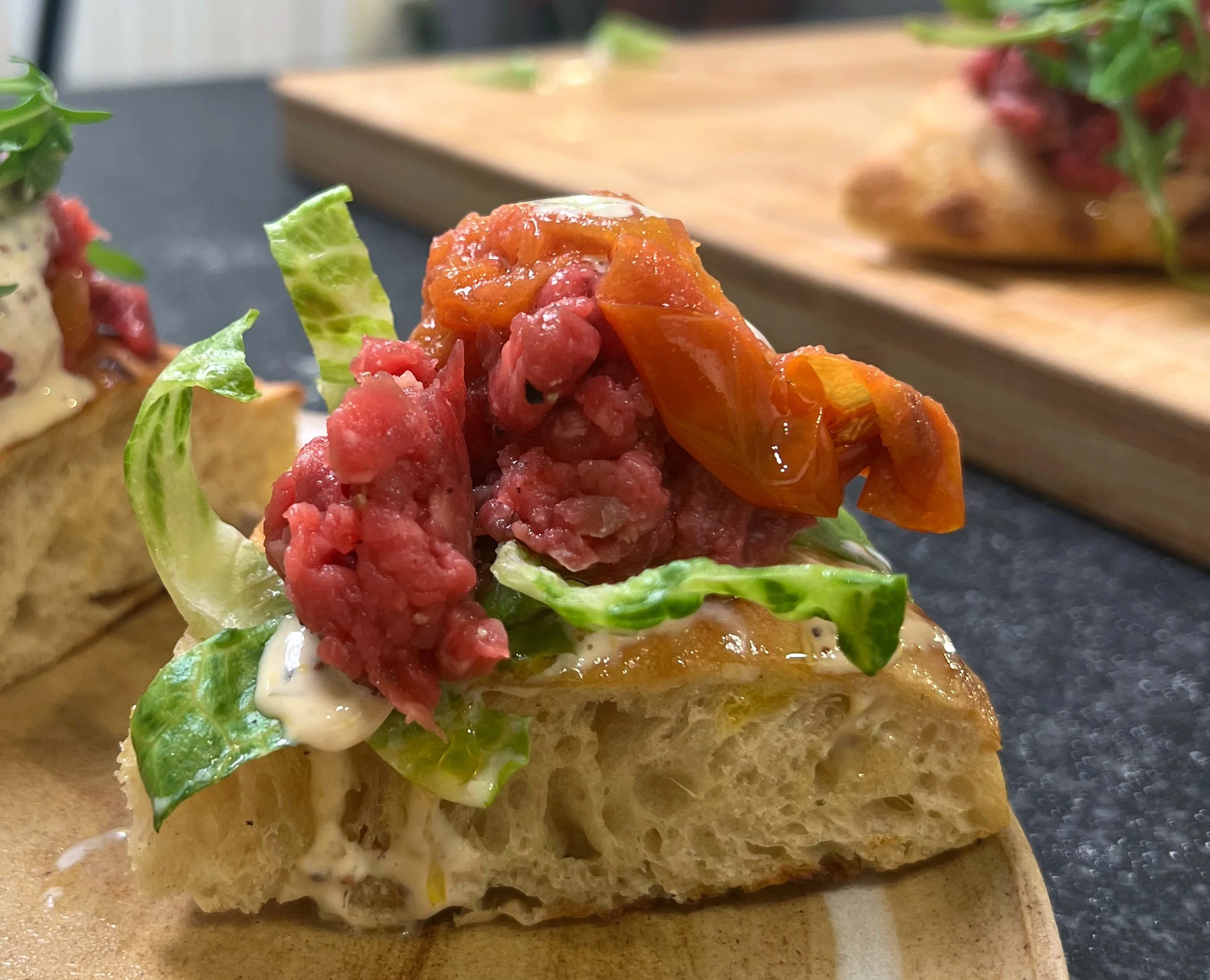
On top of the freshly re-warmed, crunchy padellino base, we layer our ingredients at room temperature:
The Anchovy & Caper Mayo: Instead of the traditional tuna sauce, I opted for a direct hit of umami. The deep, briny sapidity of quality anchovies and the sharp pop of capers give the mayo an incredible backbone. The technique: blend good anchovies (the ones packed in salt, rinsed well) with capers, egg yolk, lemon juice, and slowly emulsify with olive oil. The result is intensely savory, salty, and complex - more interesting than tuna mayo and easier to source quality ingredients.
The anchovies provide the umami depth that tuna gives in the original, but with more punch. Capers add floral, briny notes that work beautifully with beef.
The Beef Carpaccio: To get that melt-in-the-mouth texture, the beef loin is frozen (blast-chilled) and run through a precise meat slicer to achieve ultra-thin ribbons that drape beautifully over the savory mayo. Here's the technique for perfect home-sliced carpaccio:
Buy beef tenderloin or sirloin if you feel fancy (any tender cut without much marbling). I used Beef Bavette.
Trim off any sinew or fat
Wrap tightly in plastic wrap, shaping into even cylinder
Freeze until firm but not rock solid (2-3 hours)
Slice on meat slicer at thinnest setting
Local Confit Cherry Tomatoes: Ireland produces spectacularly sweet cherry tomatoes from local farmers. By cooking them down slowly in quality olive oil—exactly like you would treat a garlic confit—their natural sugars concentrate beautifully, perfectly balancing the salty kick of the anchovies. The technique is essentially garlic confit but with tomatoes:
Halve cherry tomatoes
Place in baking dish cut-side up
Drizzle with olive oil
Season with salt, sugar, maybe some thyme
Roast at 120°C for 2-3 hours until shriveled and sweet
Fresh Rocket & Shaved Hard Cheese: Finished with a handful of peppery arugula and a fine snow of aged cheese for a sharp, elegant finish.
The thermal contrast between the hot, crunchy bread and the cool, delicate toppings creates an incredibly sophisticated mouthfeel.
Why This Works for Wine Bars
Minimal Kitchen Requirements:
Small oven for reheating
Refrigeration for components
Work surface for assembly
No cooking equipment needed during service
Low-Skill Assembly:
Anyone can reheat a padellino base
Topping application is straightforward
No precision timing or technique required during service
Consistent results regardless of staff experience
Perfect Wine Pairing Format:
Small size encourages multiple orders
Rich flavors stand up to wine without overwhelming
No cutlery needed - eat with hands like focaccia
Easy to share or have individually
Cost Management:
Beef carpaccio uses economical cuts sliced thin
Anchovy mayo costs almost nothing
Confit tomatoes add perceived value from simple ingredients
Padellino base is low-cost dough product
Flexibility:
Pre-cooked bases store 2-3 days
Easy to scale up or down based on expected service
Can prep components several days in advance
Different toppings use same base (menu variety without complexity)

Recipe Engineering for Wine Bar Success
This padellino concept represents everything restaurant menu development should consider:
Operational Efficiency:
One dough recipe creates multiple menu items. The same batch that makes focaccia for lunch becomes padellino for evening wine service.
Space Optimization:
No hot cooking during service means no full kitchen required. This opens wine bar concepts for locations that couldn't support traditional restaurant operations.
Quality Perception:
Raw beef carpaccio, house-made mayo, confit tomatoes, fresh Parmesan - these are luxury indicators that justify wine bar pricing while using affordable ingredients prepared smartly.
Staff Training:
Simple assembly procedures mean less training time and more consistent results. The complexity is in the prep, not the service.
Variations: The Padellino Template
Once you understand the format, padellino becomes infinitely adaptable:
The Structure:
Pre-baked base (always the same)
Sauce/spread (provides moisture and flavor base)
Protein or vegetable (raw or pre-cooked)
Fresh elements (herbs, greens, cheese)
Finishing oil and seasoning
Other Combinations That Work:
Burrata + cherry tomato + basil + aged balsamic
Prosciutto + fig jam + arugula + Parmesan
Smoked salmon + cream cheese + capers + dill
Mortadella + stracciatella + pistachios + lemon zest
Roasted vegetables + goat cheese + honey + walnuts
The constant is the base and the technique. The toppings change based on seasonality, cost, or concept.
Pizza Menu Development Connection
For pizzerias looking to expand into wine bar concepts or add evening small-plates service, padellino is the perfect bridge product.
Operational Synergy:
You're already making pizza dough daily. Diverting some into padellino production uses existing infrastructure without adding complexity.
Market Expansion:
Padellino allows pizzerias to serve customers who want wine and snacks without full pizza commitment. It's the aperitivo format that fits American dining patterns.
Revenue Optimization:
Evening pre-dinner service (5-7pm) when full pizzas seem too heavy but customers want something with wine. Padellino fills that gap.
The Real Innovation
Back in Dublin, watching that wine bar succeed with padellino service, I realized something about menu development services: sometimes the best solution is understanding formats that already exist rather than inventing something new.
Padellino was designed a century ago to solve the exact problem modern wine bars face: how to serve food without a full kitchen.
The format works because it separates the cooking (done in batches during prep) from the service (quick assembly). This matches modern operational reality - limited space, variable service volumes, desire for perceived quality.
That's the power of understanding why traditional formats exist rather than just copying traditional dishes.
Your Padellino Opportunity
If you're running a wine bar, pizzeria, or any concept where kitchen space is limited but food sales matter, padellino deserves consideration.
The recipe development services work isn't complex - it's adapting a proven format to your specific needs:
What dough are you already making?
What ingredients do you have access to?
What does your customer base expect?
What can your staff execute consistently?
The vitello tonnato-inspired version I shared is one answer to those questions. Your answer might be completely different.
But the format - pre-baked base, quick reheat, raw/pre-cooked toppings - that template is universal.
Sometimes the best innovation is recognizing that someone already solved your problem 80 years ago in Rome.