Eggplant Polpette: When the Poor Kitchen Solves What Premium Kitchens Overcomplicate
The vegetable version teaches a lesson most chefs have forgotten
The first time I made polpetta di melanzane in a professional kitchen, I realized we'd been overcomplicating vegetable cooking for decades.
Eggplant polpette comes from the same working kitchen tradition as meat meatballs - a way of transforming simple, abundant ingredients into something substantial through technique rather than expense. Like most dishes born from poor kitchens, every grandmother has a different version and everyone thinks theirs is correct.
Most recipes treat eggplant one of two ways: fried a funghetto (diced small until it collapses into soft mush), or roasted whole then scooped out and mashed into something closer to baba ganoush. I went different: diced like funghetto but baked instead of fried.
You get the same broken-down, lightly caramelized eggplant without managing a pan full of oil. For private chef that's a meaningful difference.
The Oxidation Trick Nobody Mentions
Cut eggplant browns within minutes of hitting air. Most recipes ignore this and deal with it later - by then you're fighting discoloration.
Cut your eggplant, toss immediately with generous olive oil, salt, pepper. The oil coats it and slows browning. It seasons as it roasts instead of after.
That's it. Sounds obvious once you know it, but it changes everything about how the finished dish tastes.
Roasting, Not Frying
185°C for about 20 minutes, turning often so it colors evenly rather than steaming in one spot. It comes out slightly dried and shriveled at the edges - that's intentional, not a mistake.
Wet eggplant makes wet mixture. Wet mixture won't hold together as a polpetta. The slight drying creates structure.
The Same Philosophy, Different Direction
Bread makes up over half the mixture, soaked and squeezed the same way as meat meatballs - doing the same job of binding without creating density. Same pecorino, same raisins and pine nuts, same pressed garlic.
The one change is the herb: fresh mint instead of parsley. Small swap, huge impact on where the dish goes - especially when you see how it's plated.
Why Panko Works Here Without Egg Wash
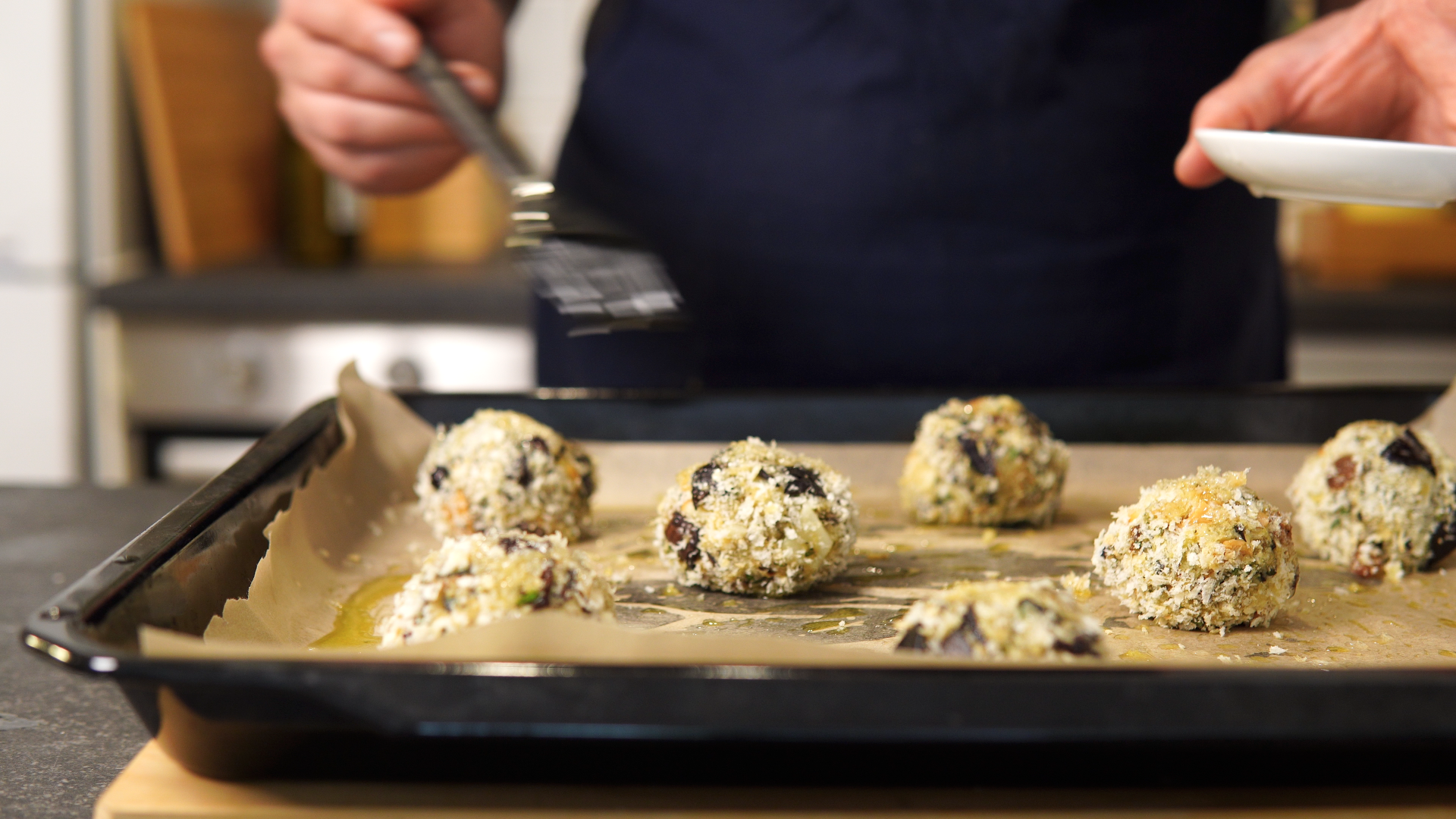
The mixture from the bread is damp enough that panko sticks directly without egg wash or flour. One less step, lighter crust for it.
Pan-frying doesn't work - the mixture is softer than meat meatballs and falls apart in oil. Air fryer works perfectly, or brush with olive oil and bake at 200°C for 15-18 minutes.
The Plating Changes Everything
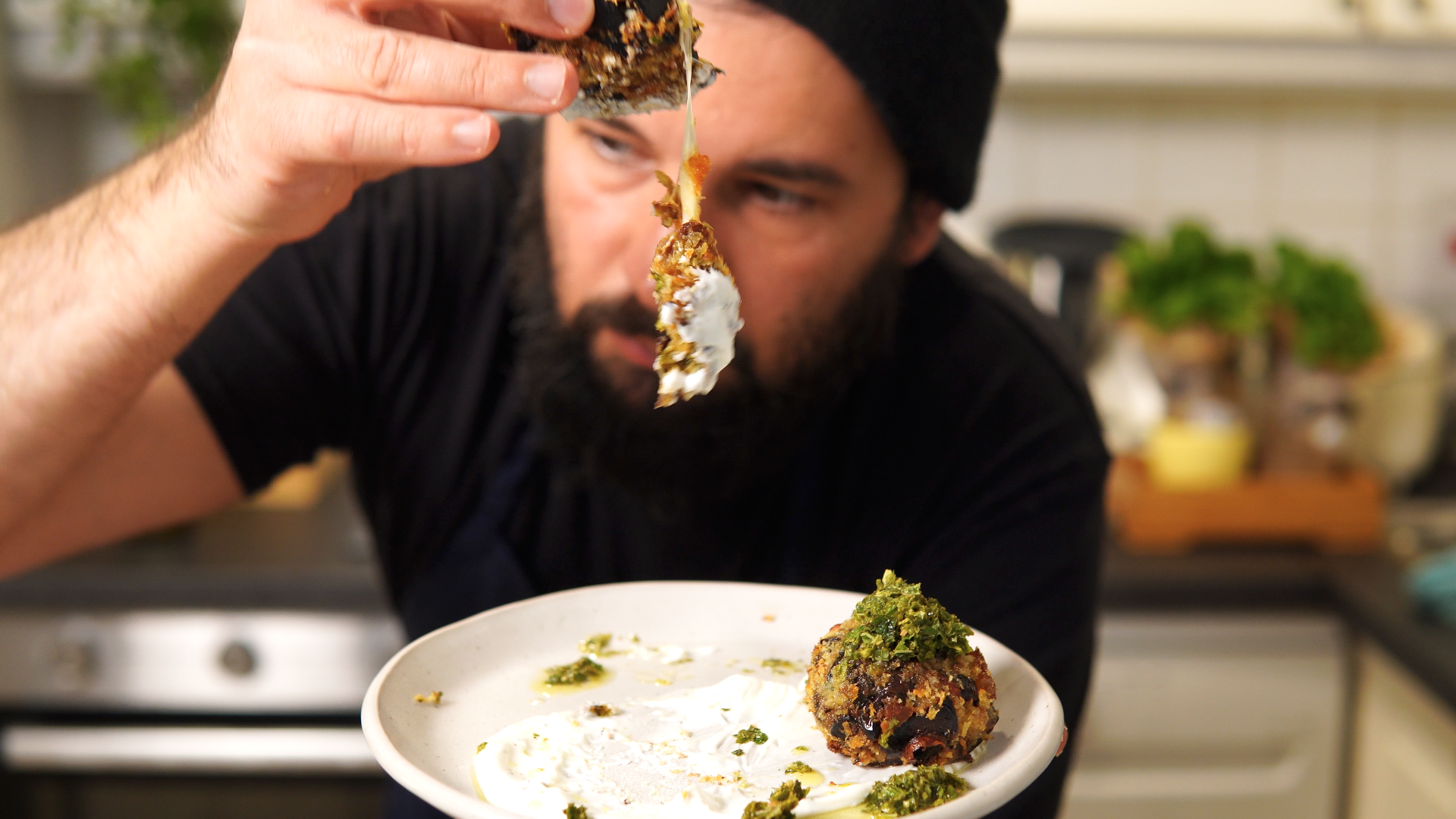
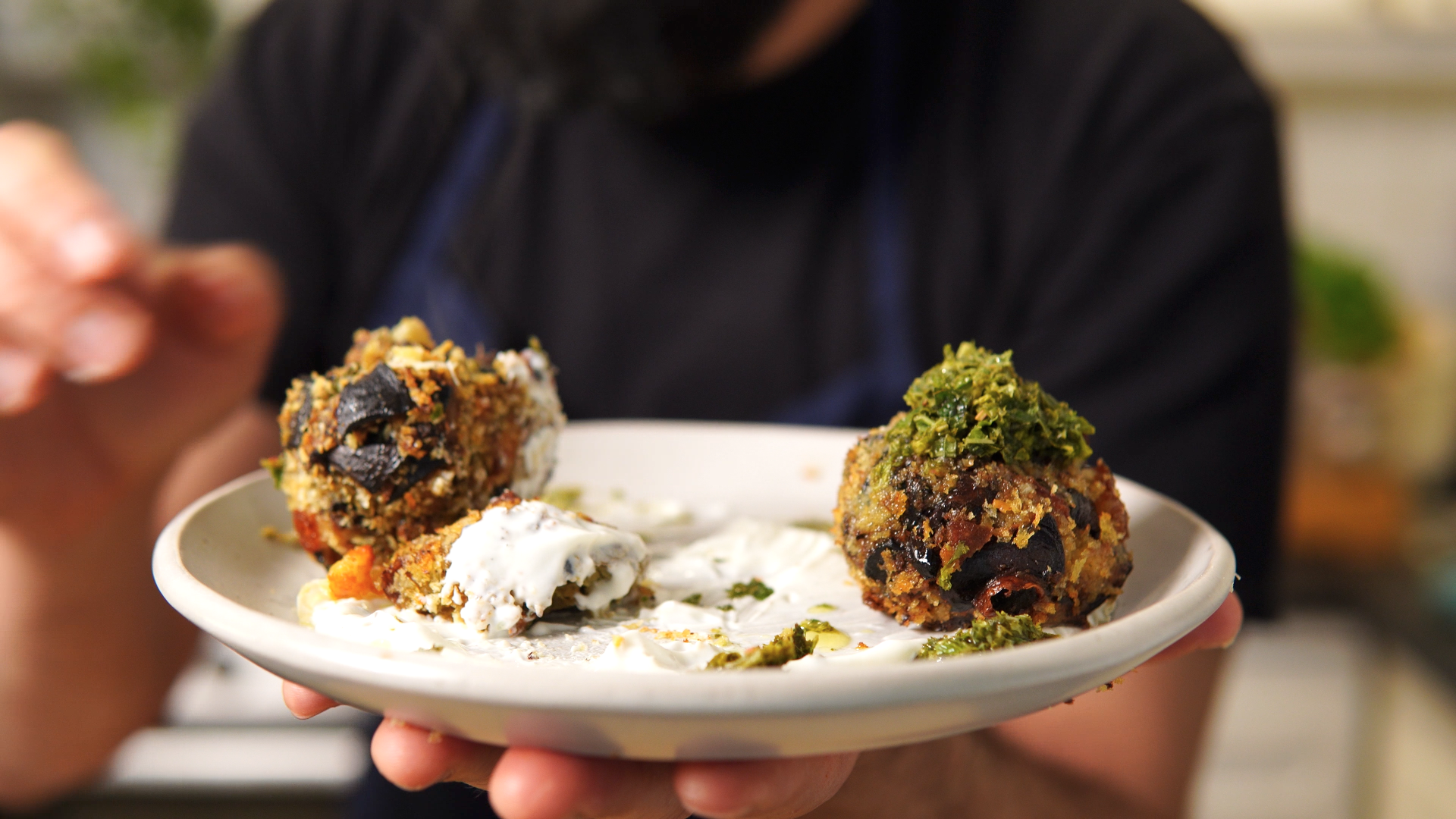
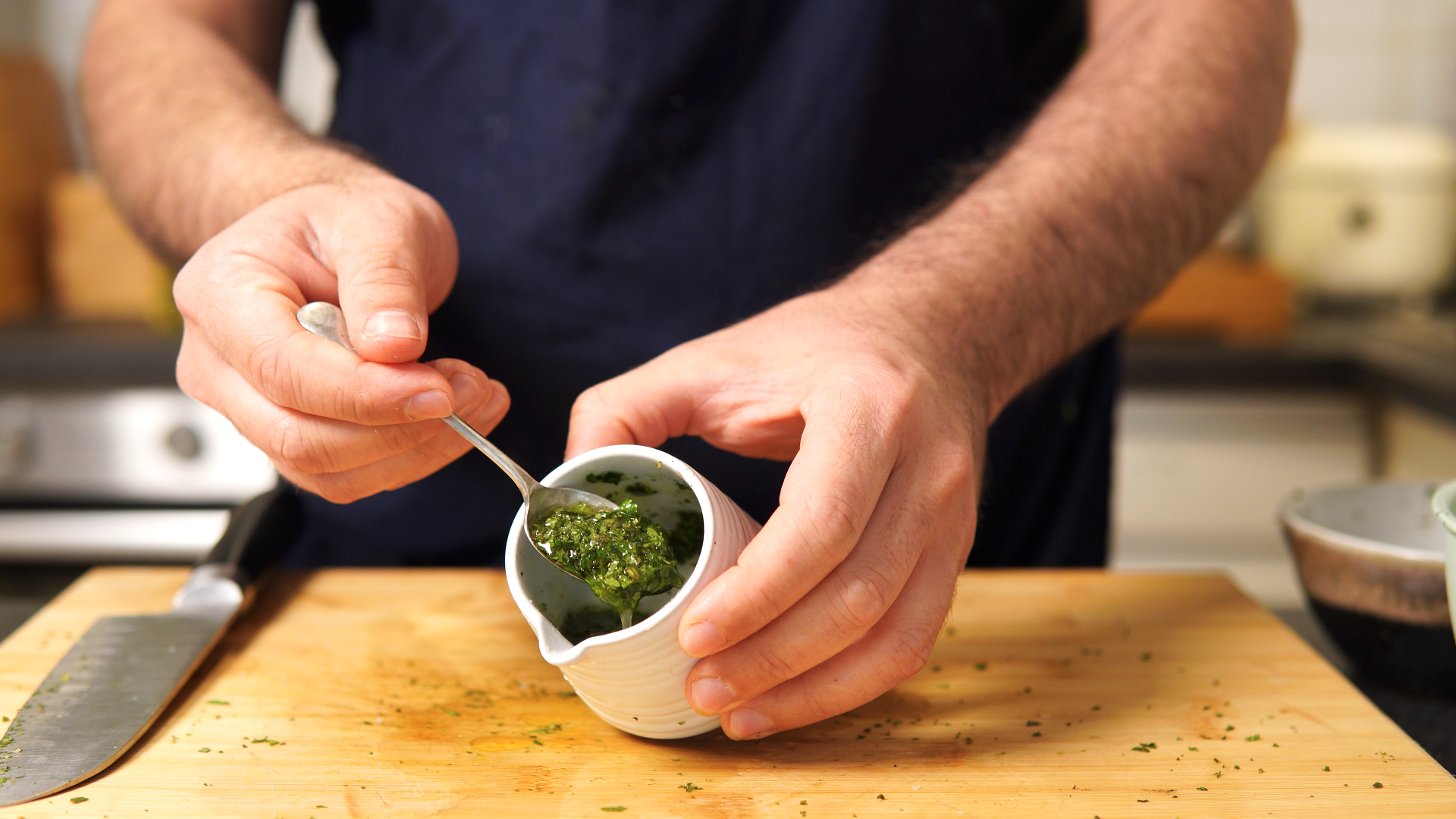
Served over tzatziki with mint and lemon pesto spooned over top - that's where the mint in the mixture reveals itself. Everything pulls in the same direction.
The tzatziki is simple: Greek yogurt, lemon juice, crushed garlic, olive oil, salt. The pesto is fresh mint, lemon zest and juice, olive oil blitzed to loose paste.
The acidity cuts through the richness. The mint echoes what's inside. The cooling effect of yogurt balances any heat perception from the olive oil and eggplant.
Why This Matters for Your Menu
Eggplant polpette solve a real commercial recipe development problem: how to create substantial vegetable dishes that don't feel like compromise or afterthought.
This isn't a delicate vegetable preparation that requires precision timing and constant attention. It's robust, it holds together, it can be made in batches and held until needed. It works at room temperature or reheated. It's the vegetable equivalent of what meatballs are for meat kitchens.
What eggplant polpette teach is that good cooking doesn't come from complicated techniques or expensive ingredients. It comes from understanding why methods work.
You roast instead of fry because it solves an operational problem (less oil management, better texture control). You use bread because it creates structure from abundant, cheap ingredients. You add mint because it creates flavor direction without adding cost.
Every choice has a reason. None of it is decoration.