Scapece on Pizza: Why Ancient Preservation Techniques Still Solve Modern Kitchen Problems
A 500-year-old method that works better than anything we've invented since
Scapece is one of those dishes that reminds you preservation isn't about salvaging scraps - it's about creating something better than what you started with.
The name probably comes from Spanish escabeche, brought to Naples during Spanish rule, though older food historians argue it traces back to "ex Apicio" - after the Roman gastronome who was already using vinegar for preservation centuries before Naples existed. Either way, the technique does one job and does it perfectly: use acidity to keep something edible well past the day it was cooked.
Traditionally that means courgette - sliced rounds, fried, then left to marinate in vinegar, garlic and fresh mint. Simple, proven, unchanged for centuries because it works.
This version keeps the spirit of that technique but changes the execution. Not because traditional is wrong, but because understanding why a technique works lets you adapt it to different contexts.
The Courgette: Split Technique, Same Cook
Both courgette preparations start from the same single roast. No frying - I want to avoid managing oil and get cleaner flavor development from the dry heat.
Roast all the courgette slices together with olive oil, salt and pepper until soft and lightly colored. Then split it.
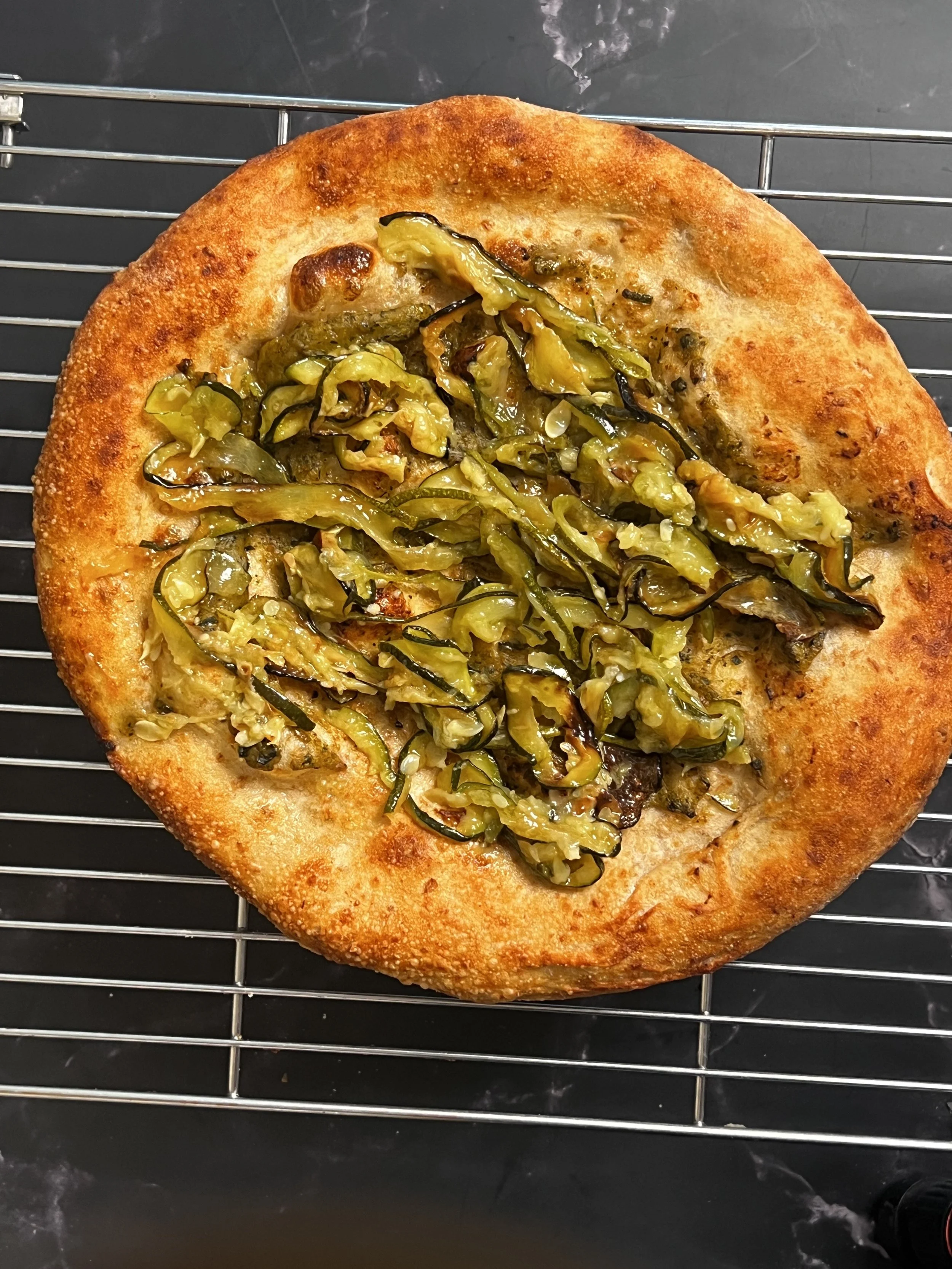
Half becomes a simple purée - blended smooth, seasoned with nothing but salt and pepper. This is your pizza base, providing moisture and courgette flavor without competing with what comes on top.
The other half goes into the pickle, but not the traditional vinegar-garlic-mint bath. Mine is an emulsified brine.
The Emulsified Brine: Why This Matters
Equal parts white wine vinegar and water. Lemon for a second layer of acidity. Sugar and salt balancing the sharpness. Then olive oil blended in at an equal ratio to the vinegar-water combination - so it emulsifies into the liquid rather than sitting on top.
This is different from traditional scapece in a meaningful way. The oil doesn't separate. The courgette doesn't taste oily and acidic in layers - it tastes integrated, complex. The emulsification means every piece of courgette gets coated in all the flavors simultaneously.
Forty-eight hours submerged and fully covered in the fridge - the courgette actually takes on the brine instead of just sitting in it. The acid penetrates, the oil carries flavor, the result is something that tastes like it's been preserved for weeks even though it's only been two days.
The Confit Prawns: Temperature as Technique
The prawns are treated with the same precision the courgette demands, just different method.
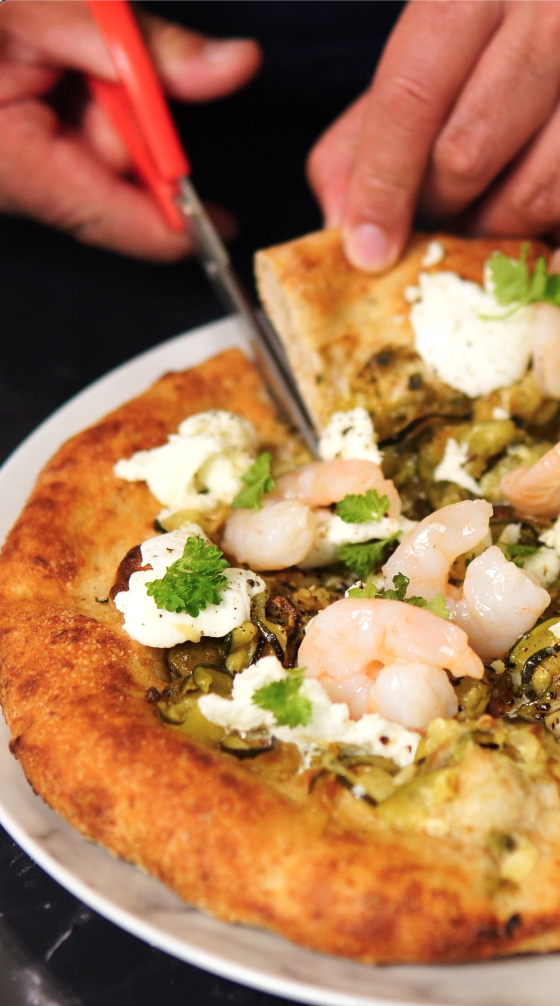
Peeled and cleaned, then bagged - vacuum-sealed or well-sealed zip-lock - fully submerged in olive oil with fresh basil. Cooked at 55°C for 10 minutes.
That specific temperature is the difference between confit and poach. At 55°C, the proteins set gently instead of seizing up. The prawn stays tender, silky, almost buttery in texture. High heat does to shellfish what it does to everything protein-based - seizes it up, turns it rubbery, creates texture loss you can't reverse.
This is what understanding technique actually means - knowing that temperature isn't just "hot enough to cook," it's a variable that controls the outcome completely.
Assembly: Three Layers of Flavor Direction
The dough is the same as the pepperoni pizza - 68% hydration, three flours, no oil, long cold fermentation. It needs to be sturdy enough to handle moisture without turning into bread.
Stretch the dough, spread the courgette purée as the base. Bake until the crust is deeply colored and crisp.
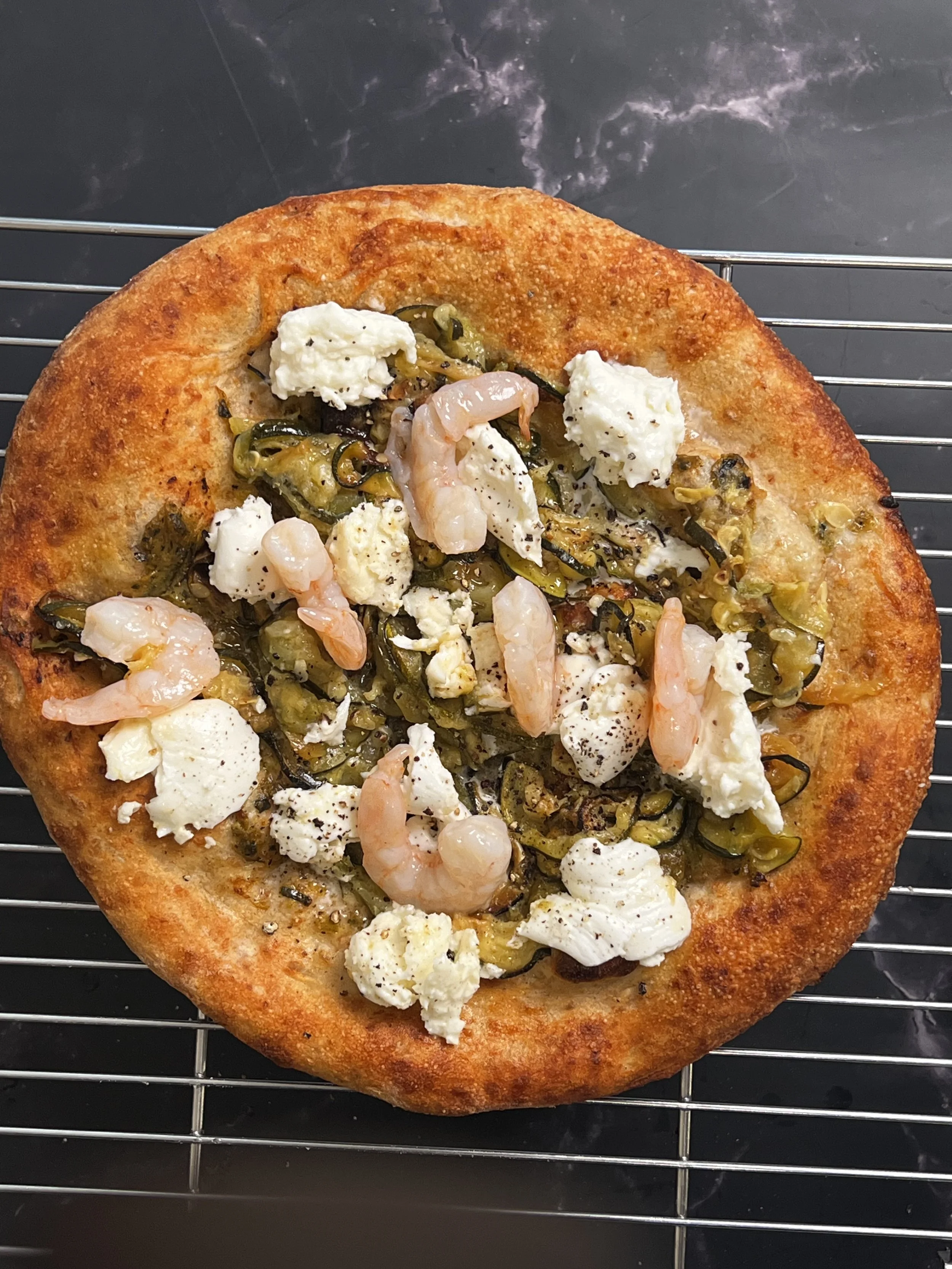
Right out of the oven: pickled courgette, confit prawns, torn fresh mozzarella, fresh basil.
Everything has acidity - the pickled courgette, the lemon that went into the brine, the basil providing brightness. Everything has been cooked or preserved with intention. Nothing is raw except the mozzarella and herb garnish that add freshness and texture contrast.
Why Preservation Matters in a Pizza Context
Scapece as a technique teaches something important aboutcommercial recipe development: preservation methods create components that can be made in batches and used across multiple applications.
The pickled courgette stores for weeks. The confit prawns store for days. The courgette purée can be made whenever you roast vegetables. None of this requires last-minute cooking during service.
This is what kitchens with actual constraints need - components that can be built in advance, components that improve with time rather than degrading, components that allow service flexibility without sacrificing quality.
The technique is old because it works. Not because it's nostalgic, but because it solves real operational problems better than modern shortcuts.