Pepperoni and Peppers: How a Name Confusion Led to Better Pizza
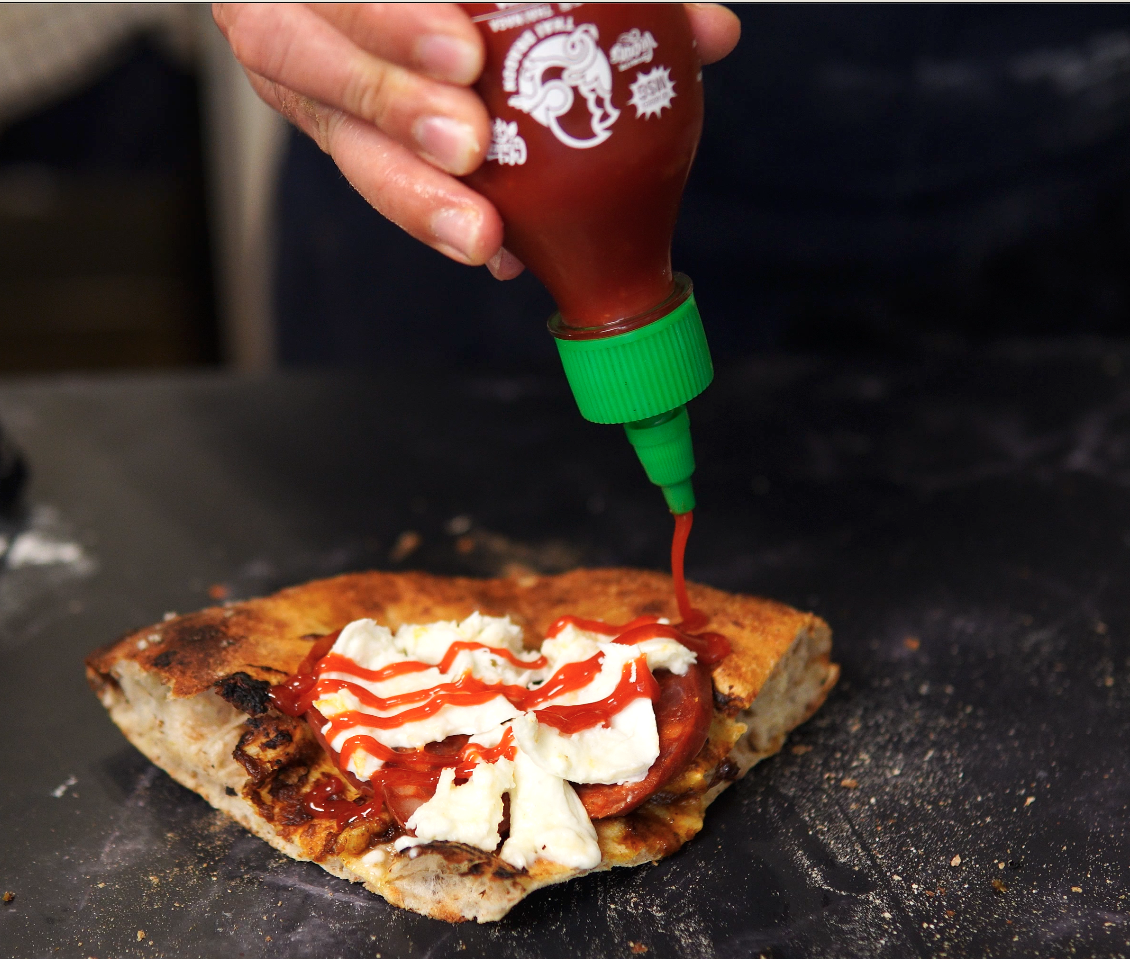
When you realize Americans accidentally got the Italian wordplay right
I didn't understand the pepperoni joke until I was much older. As a kid, hearing Americans talk about pepperoni pizza just sounded like they were putting bell peppers on dough and calling it a day. Peperoni, peppers - it made sense in a confused sort of way.
The real story is both simpler and more interesting. Pepperoni takes its name from peperoncino - the chilli that gives the cured sausage its heat. Somewhere in the translation across languages and oceans, the name stuck to the meat instead of the chilli that defined it.
Now, ironically, we Italians have started using pepperoni the American way too. We borrowed our own word back after it went on a trip through another language.
This pizza plays on both meanings at once. Real bell peppers roasted until soft and charred. Real pepperoni - artisanal chorizo in natural casing, the kind that takes actual looking to find. That last detail matters more than most people realize.
Why Nitrate-Free Matters Here
Most cured meat you'll find uses sodium nitrite or nitrate. It fixes color, extends shelf life, stops dangerous bacteria. On their own, nitrates and nitrites aren't villains - most of what we eat comes from vegetables anyway, not cured meat.
The concern is specific: what happens when they're cooked at high heat in a fatty, protein-rich food like pepperoni on pizza. Health authorities have raised concerns about a link between dietary nitrite in processed meat and colorectal cancer, largely because nitrites can convert to nitrosamines under high heat - carcinogenic compounds.
It's worth looking for a chorizo cured without them. Not always easy to find, but the kind of thing worth being fussy about if you can manage it.
On pizza especially - when you're baking at 280°C+ - that heat conversion becomes real.
The Dough: 68% Hydration, Three Flours
This isn't a forgiving dough. Low hydration means less water to work with, which demands more technique. Three flours means balancing structure, strength, and flavor without relying on oil to soften things.
The formula:
30% Petra 5037 (structure and extensibility)
50% Marriages Uppermost Strong (backbone strength)
20% Wholemeal (flavor and slight chew)
68% water
15% salt
2% dry yeast
The Process:
Mix the three flours with water, knead by hand for structure. Rest 30 minutes, add salt, then two sets of stretch & fold every 30 minutes. This builds strength without needing intensive kneading.
Bulk ferment in the fridge for 24 hours - long, cold fermentation develops flavor better than fast fermentation. Divide into 280-300g balls, return to fridge for 72 hours.
The long cold fermentation makes the dough more extensible and flavorful. You can also shape it straighter and it bounces back less aggressively.
The Roasted Pepper Base
Roast whole bell peppers until the skin blisters completely and the flesh turns soft with some charring. The charring adds depth
Blend with just enough olive oil and a pinch of salt to reach cream consistency. Spreadable but with texture.
Assembly
Spread the pepper cream across the base in spots, not centered, this to prevent to much moisture during baking and have the slice extra crisp..
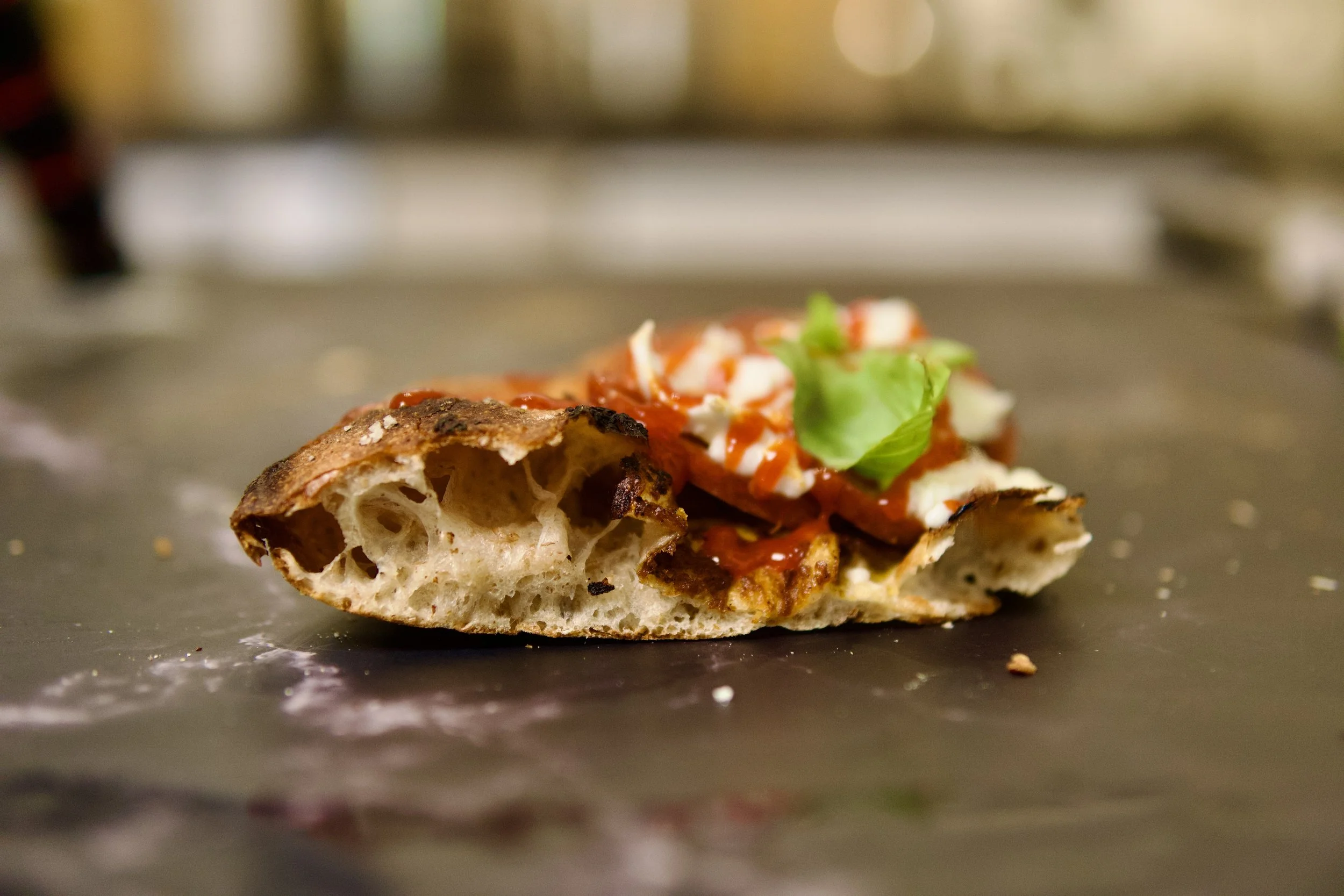
Bake until the crust is deeply colored and crisp. This usually means the bottom is nearly blackened in spots
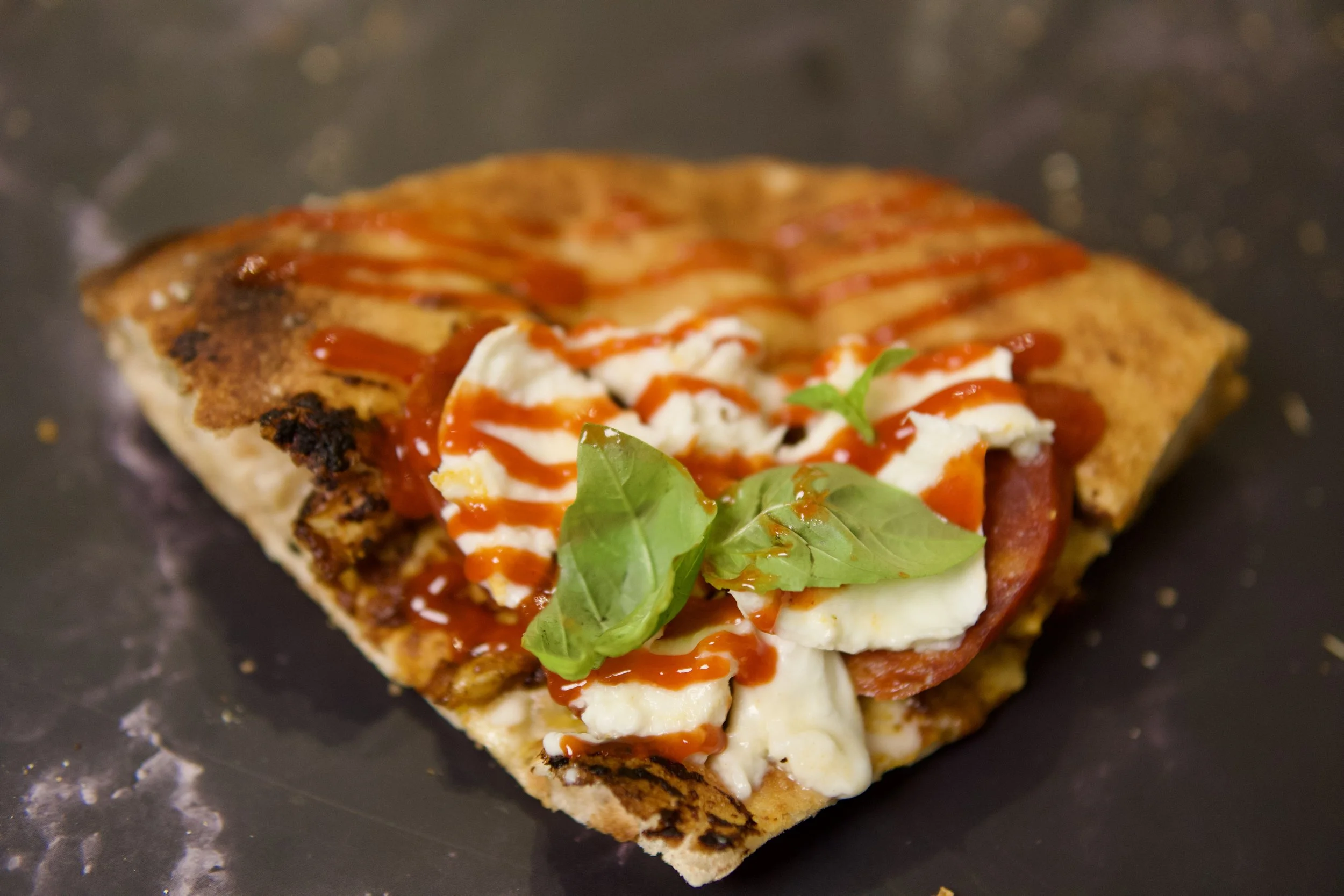
Right out of the oven, layer thinly sliced chorizo, torn mozzarella, a drizzle of sriracha for heat and acidity, fresh basil leaves.
The sriracha adds modern heat without masking the chorizo's spice. Basil provides freshness.
If you want it, a light drizzle of honey creates sweet-heat contrast - the honey brightens and adds gloss while emphasizing the heat from sriracha and chorizo.
The three-flour dough creates a crust that can handle moisture - it doesn't turn into bread, it stays crispy and structured even with all the toppings.
Artisanal chorizo - proper cured meat without shortcuts - makes a difference you can actually taste. The spice profile is more complex, the texture is proper, the flavor doesn't disappear into generic processed-meat blandness.
This is what matters in menu development services - understanding why each component is there, not just assembling expensive ingredients and calling it premium.