When a Tiny Yakitori Grill Solves Your Entire Menu Problem: Lessons from Niseko's Winter Season
Two months in Japan taught me that the best solutions come from working with what you have, not what you wish you had
I just got back to Dublin after spending two months in Niseko, Japan, helping renovate the menu at Milky House Country Inn. The snow was relentless, the kitchen was smaller than I expected, and we had a problem: how do you add authentic bincho-tan charcoal cooking to a neo-izakaya menu when you barely have room to turn around?
The answer turned out to be simpler than I thought - and it's taught me more about menu development services than any textbook ever could.
The Problem With Japanese Restaurant Dreams
Everyone wants the romance of yakitori cooking - the bincho-tan charcoal, the theater of the grill, the smoky aroma filling the dining room. Then reality hits: your kitchen is 12 square meters, you don't have ventilation for a full robata setup, and you still need to serve 40 covers on a Saturday night.
At Milky House, we faced exactly this. We wanted to introduce grilled skewers as part of our neo-izakaya direction, but the kitchen space was already tight. A full yakitori station? Impossible. Giving up on charcoal entirely? That felt like admitting defeat.
So we bought a small yakitori grill - the kind you'd see at a Japanese street stall - and put it directly under the extraction fan. That's it. No fancy installation, no kitchen renovation. Just a small grill and the willingness to adapt our technique to match our reality.
The Shabu-Shabu Revelation
We already had shabu-shabu on the menu, which meant we were ordering ultra-thin sliced beef and pork. These slices are so thin you can almost see through them - maybe 1-2mm thick. They're meant for quick hot-pot cooking, not grilling.
But here's what hit me one evening while prepping: what if we could use this same meat for skewers?
The technique became obvious once I stopped thinking about traditional yakitori preparation. Instead of marinating whole chicken thighs or cutting thick protein chunks, we treated the thin-sliced meat like building blocks.
The Layering Method:
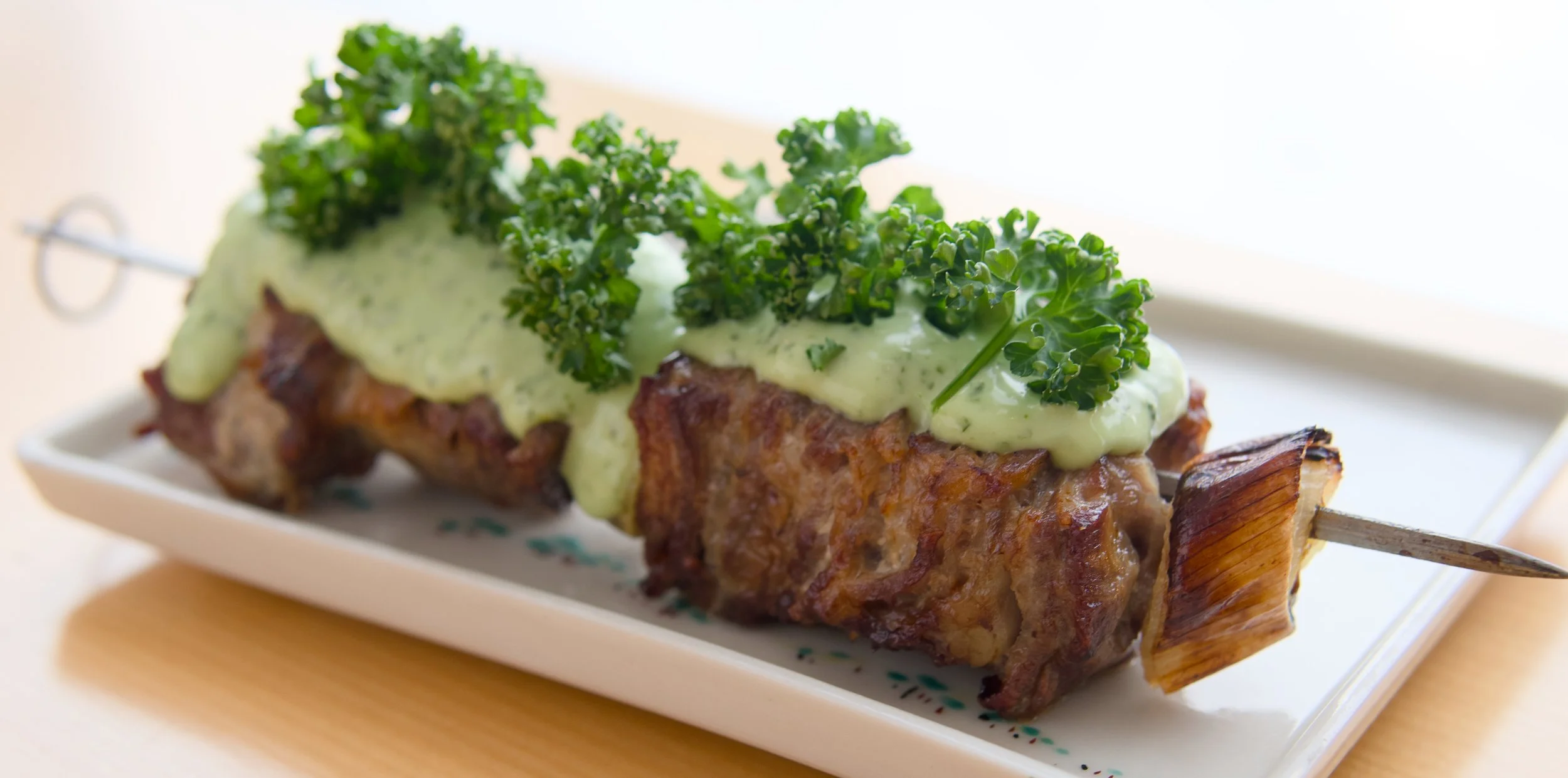
I laid out the beef and pork slices in a deep tray, alternating layers like you would for lasagna. Between each layer, I brushed a marinade I'd developed using Dijon mustard (sharp, tangy), fish sauce (umami depth), and fresh herbs - rosemary and oregano mainly, whatever was in the kitchen that day.
Layer after layer until we had this beautiful "lasagna" of marinated meat, maybe 8-10cm thick. Then into the freezer for 30-40 minutes - not frozen solid, just firm enough to handle.
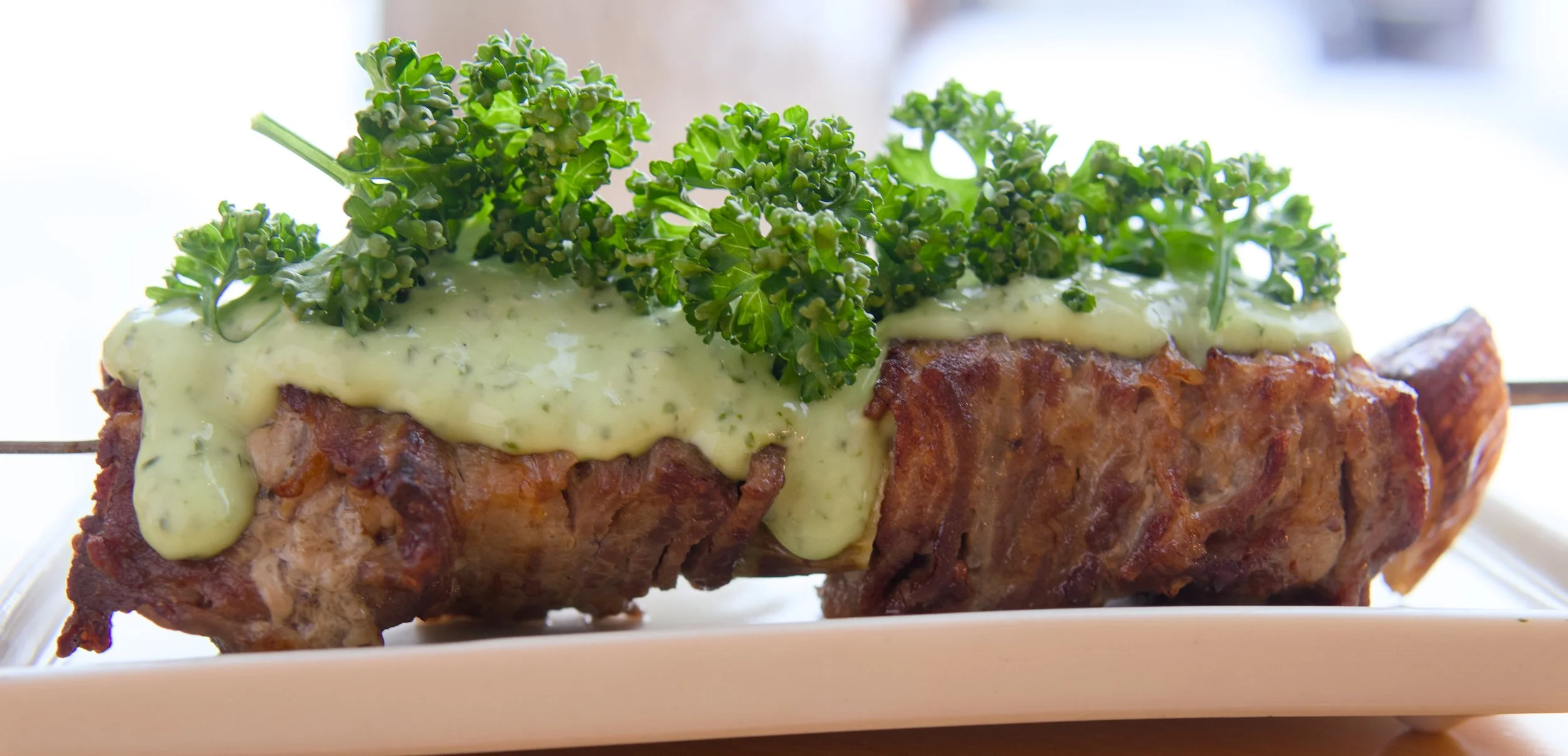
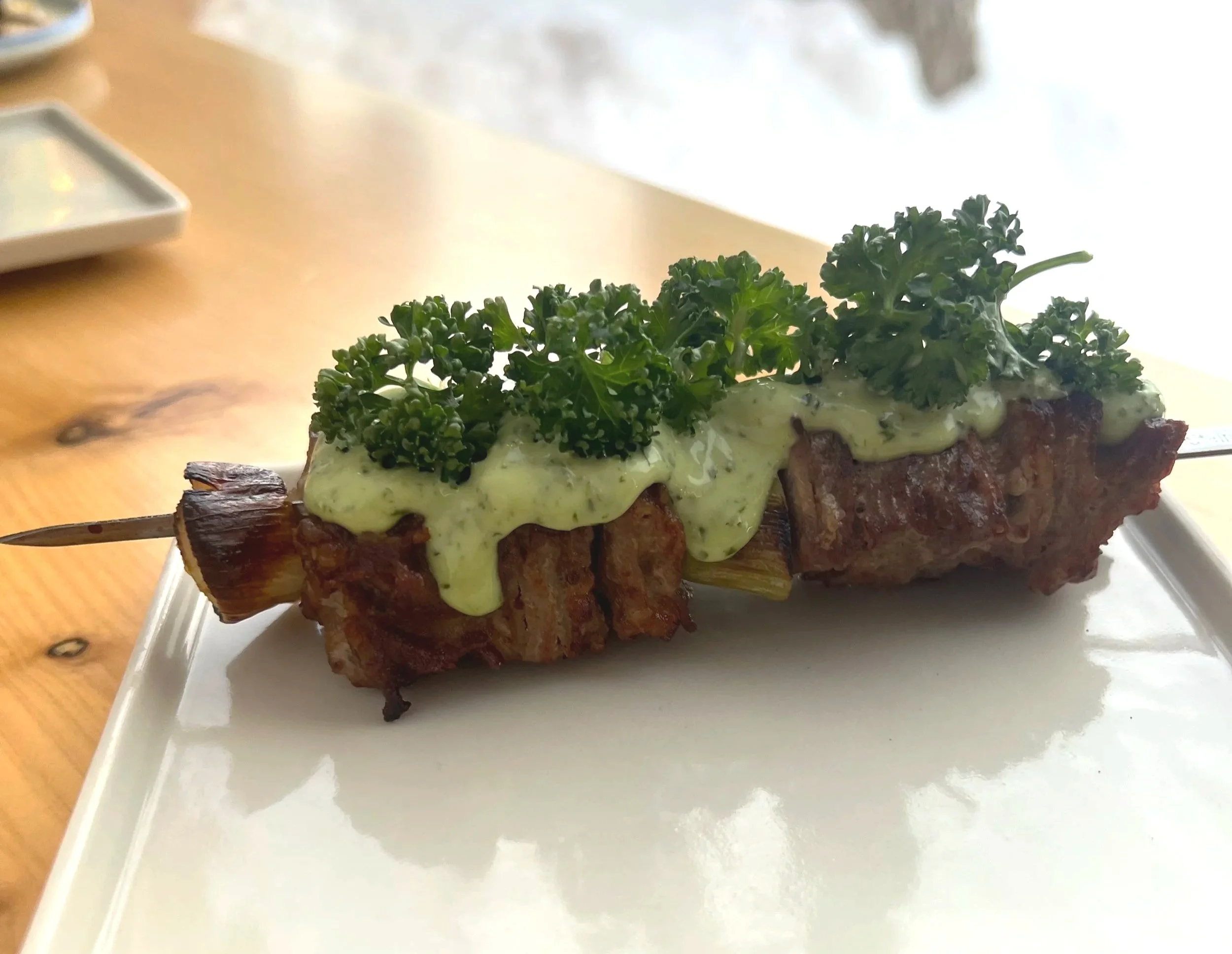
Once semi-frozen, I cut the entire block into cubes and skewered them. Each cube was actually 15-20 layers of ultra-thin meat compressed together, all pre-marinated and ready to cook.
Five Minutes on Bincho-Tan Changes Everything
Here's what makes this work: because the meat is so thin and already layered, these skewers cook in 5-7 minutes over the small charcoal grill. The exterior caramelizes from the marinade while the interior stays incredibly tender.
No basting needed during cooking. The marinade is already inside every layer. The pork fat renders just enough to keep everything moist. You just turn them once and they're done.
For a tiny grill under an extraction fan, this was perfect. We could fire 8-10 skewers at a time, and they'd be ready before the next order even came in. No bottleneck, no stress, just constant gentle production throughout service.
The Details That Made It Work
Parsley Mayo Finish
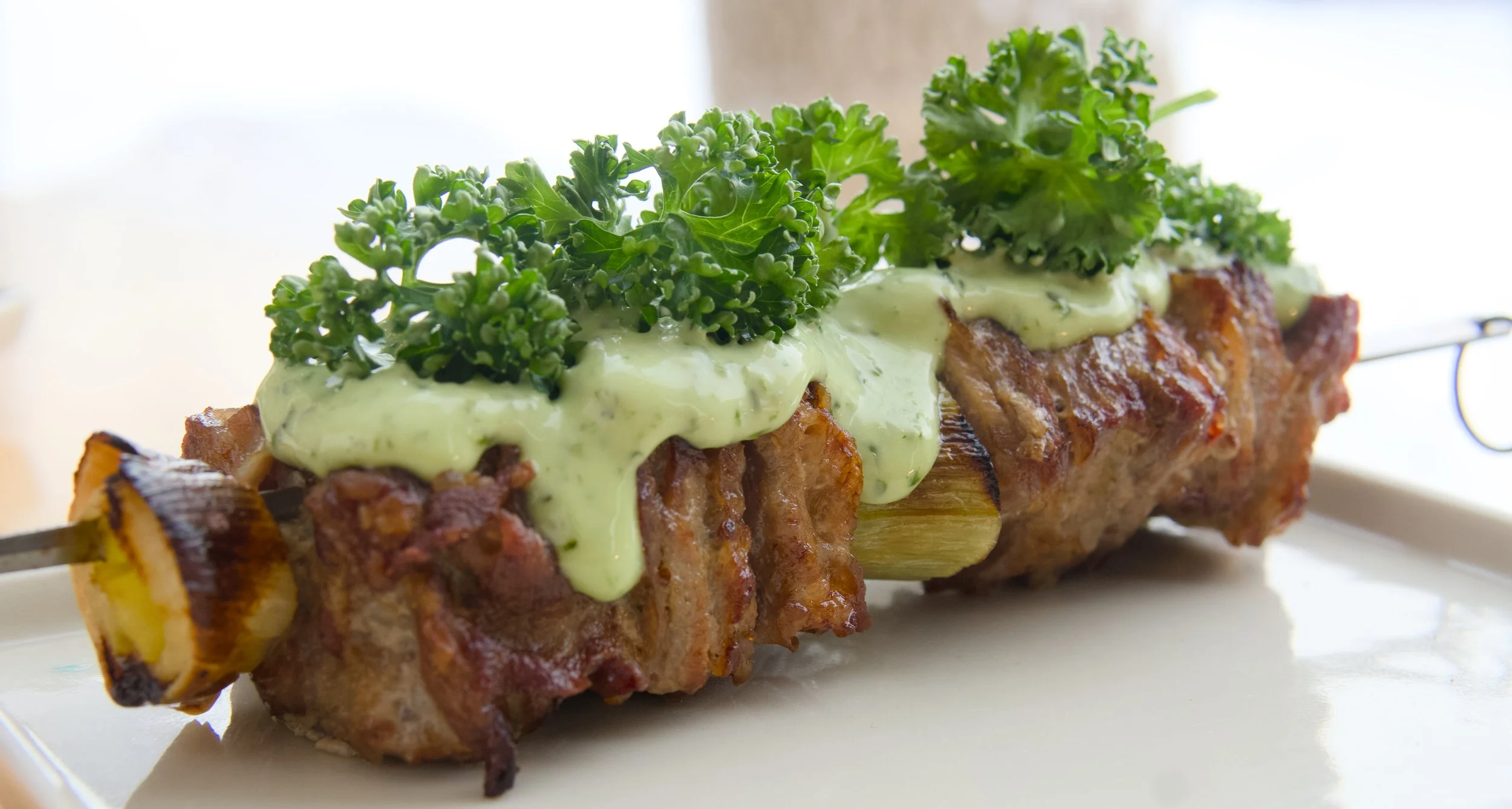
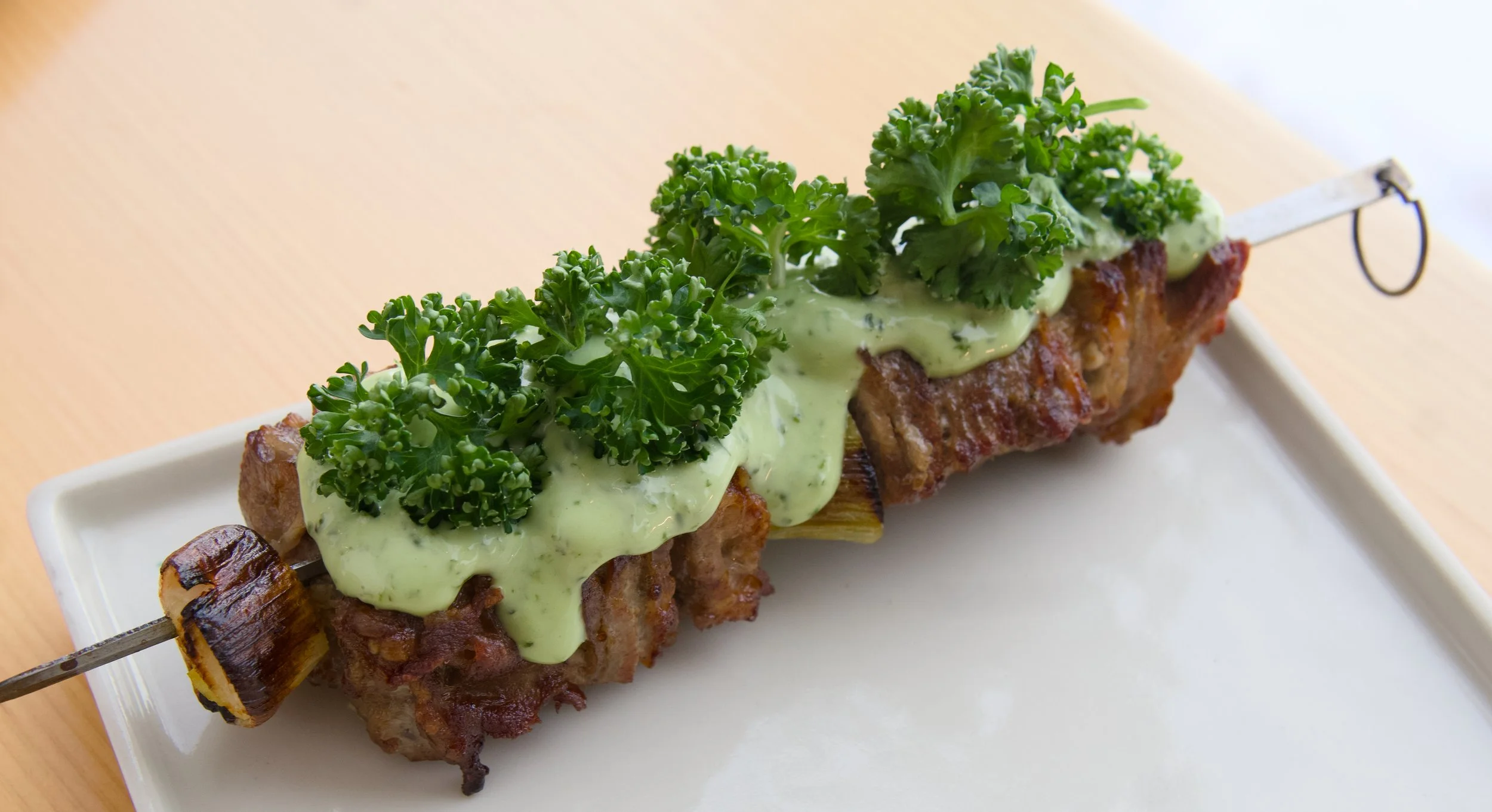
I made a simple parsley mayo - good quality Japanese mayo mixed with blanched, blended parsley until it turned pale green. This goes on the plate as a base, providing richness and a fresh herbal note that balances the charcoal smoke and marinade intensity.
Fresh Parsley Leaves
A small handful of fresh parsley leaves on top of the skewers. Not just garnish - they add a bitter, fresh contrast that your palate needs after rich, fatty meat.
Lemon Wedge
Essential. Customers squeeze lemon over everything between bites. It cleanses the palate and lets them enjoy multiple skewers without flavor fatigue.
The presentation looked elegant but cost almost nothing. Meat we were already buying, herbs from our daily prep, lemon and mayo from regular stock.
What This Taught Me About Restaurant Menu Development
This dish became our most popular starter, and it taught me something important about restaurant menu development service work: the best solutions often come from constraints, not unlimited resources.
If we'd had a huge kitchen and unlimited budget, we probably would have installed a full yakitori station, hired a specialized grill chef, and created elaborate tare sauces. It would have been "authentic" but also complicated, expensive, and honestly probably not as good.
Instead, we worked with what we had:
Tiny grill? Use it for quick-cooking items
Already ordering shabu-shabu meat? Repurpose it creatively
Limited prep time? Build flavor into the marinade instead of applying it during service
Small kitchen team? Design dishes they can execute consistently
This is what real recipe engineering looks like - not laboratory formulation, but practical problem-solving that creates delicious food within real operational constraints.
The Oven Adaptation
Here's the honest truth: for larger parties or when we got slammed, we couldn't rely on the small grill alone. So we developed a hybrid approach.
Pre-grill the skewers for 2-3 minutes on the charcoal - just enough to get the smoky char and aroma. Then finish them in a hot oven (220°C) for another 3-4 minutes.
The result? They still taste charcoal-grilled because they were, but we could handle 20-30 skewers at once instead of 8-10. The smoky aroma stays, the meat cooks through perfectly, and customers never knew the difference.
For Japanese restaurants without proper yakitori facilities, this hybrid approach is a game-changer. You get the authenticity and flavor of charcoal without needing a full robata installation.
What Western Japanese Style Restaurants Can Learn From This
If you're running a Japanese restaurant and want to add charcoal cooking but don't have space or budget for a full yakitori setup, consider this approach:
Start Small, Start Smart
A small yakitori grill costs $200-400. Put it under your extraction fan, test it for a few weeks, see if it works for your operation. You don't need to commit to a $15,000 robata installation to serve grilled food.
Repurpose What You're Already Buying
We used shabu-shabu meat, but this technique works with any thin-sliced protein. Korean BBQ cuts, hot pot items, even premium beef carpaccio slices - anything thin can be layered, marinated, and skewered this way.
Build Flavor Into Prep, Not Service
Traditional yakitori uses tare sauce applied during grilling. That requires skill, timing, and attention. Our marinade approach builds all the flavor in during prep, so service is just "grill until done." Much easier to train, much more consistent results.
Plan for Volume From Day One
The oven-finish technique isn't a compromise - it's smart menu and recipe development. Design your cooking process to scale up when you need it, not just for perfect conditions.
The Personal Side
Two months in Niseko was intense. Small kitchen, high expectations, language barriers, and the pressure of renovating an established restaurant's menu. Some days were frustrating - things that should have been simple became complicated by space constraints and equipment limitations.
But those constraints forced creativity. The skewer dish exists because we couldn't do it the "proper" way. The layering technique happened because I was frustrated trying to marinate individual meat slices and thought "there has to be a better way."
This is what working in real kitchens teaches you. Theory is clean and organized. Reality is messy and requires adaptation. The best dishes often come from moments of frustration where you have to figure something out right now with what you have in front of you.
Back to Dublin With New Perspective
I'm back in Dublin now, and I keep thinking about that tiny yakitori grill under the fan. It represents something important about food formulation services and restaurant menu development - the best solutions are the ones that work, not the ones that sound impressive.
If you're struggling to add new techniques to your restaurant but feel limited by space, equipment, or budget - good. Those limitations will force you to find creative solutions that might actually work better than the "proper" approach.
The skewer dish proved that you don't need traditional yakitori training, expensive equipment, or perfect conditions to serve great charcoal-grilled food. You need good ingredients, smart technique, and willingness to adapt based on your actual reality.
That tiny grill taught me more about recipe engineering than any perfect test kitchen ever could.